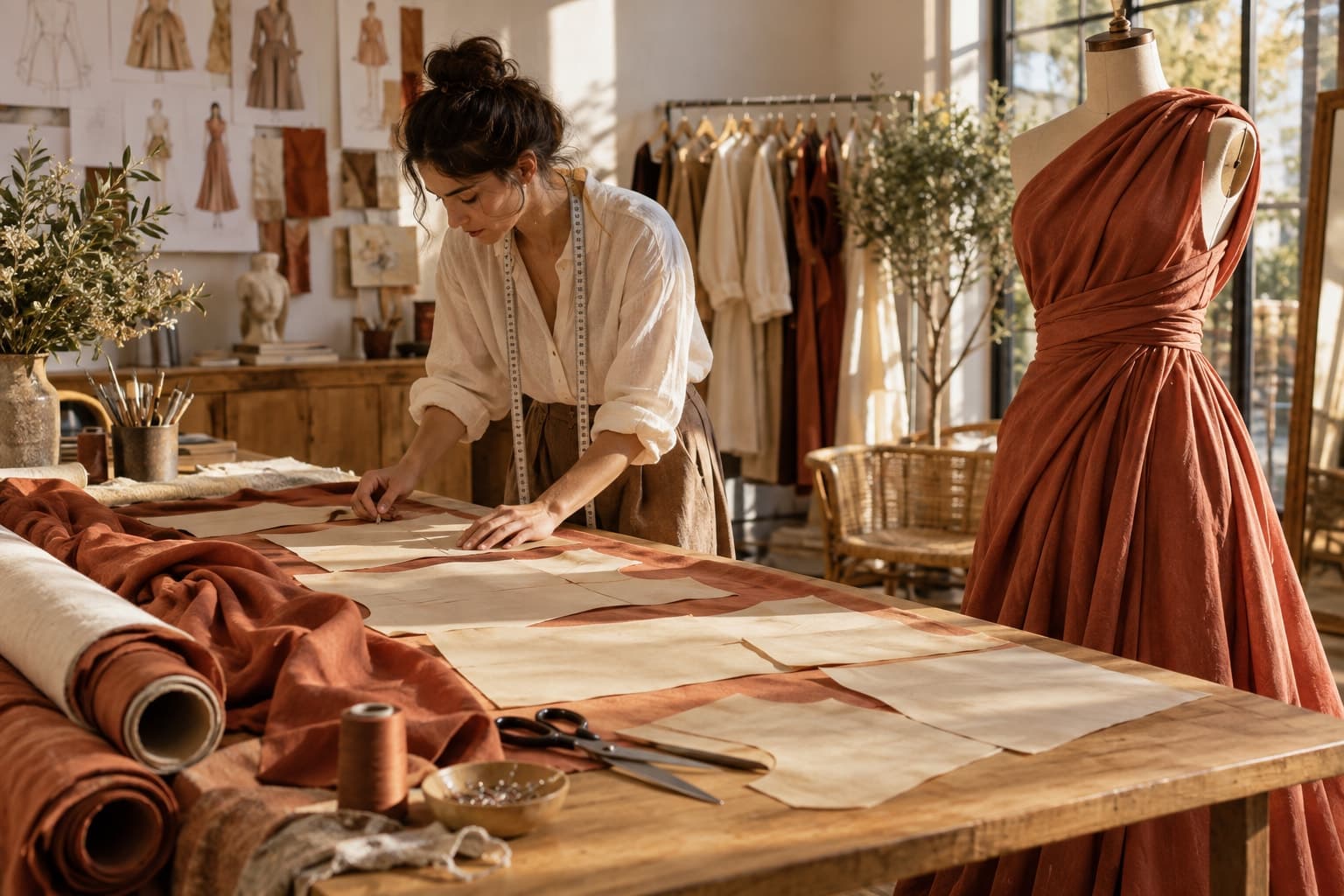
Separate creative exploration, product operations, merchandising, and customer-facing decisions before choosing where AI belongs.
The starting point
“AI in fashion” describes many different activities. A designer exploring a silhouette, a merchandiser preparing a listing, and a support team drafting a reply are solving different problems. Treating them as one transformation makes it difficult to choose a useful starting point or understand what should remain under human control.
Draw a simple map of your business from idea to customer. Place each proposed use beside the task it changes. Then ask what information goes in, what comes out, who checks it, and what happens if it is wrong. This turns an expansive technology discussion into a series of decisions that can be made responsibly.
Creative exploration needs room and clear labels
During early collection development, generated images can serve as prompts for discussion. A team might explore colour relationships, styling, or a campaign setting. Keep those outputs labelled as concepts, and record which aspect of an image interests you. An appealing picture should not silently become a promise about a product's construction.
Creative approval belongs to people who understand the brand and the collection. A tool can offer variations, but the team still decides which direction deserves development. Preserve rejected concepts when the reason is instructive, such as a silhouette that conflicts with the intended occasion or a scene that distracts from the garment.
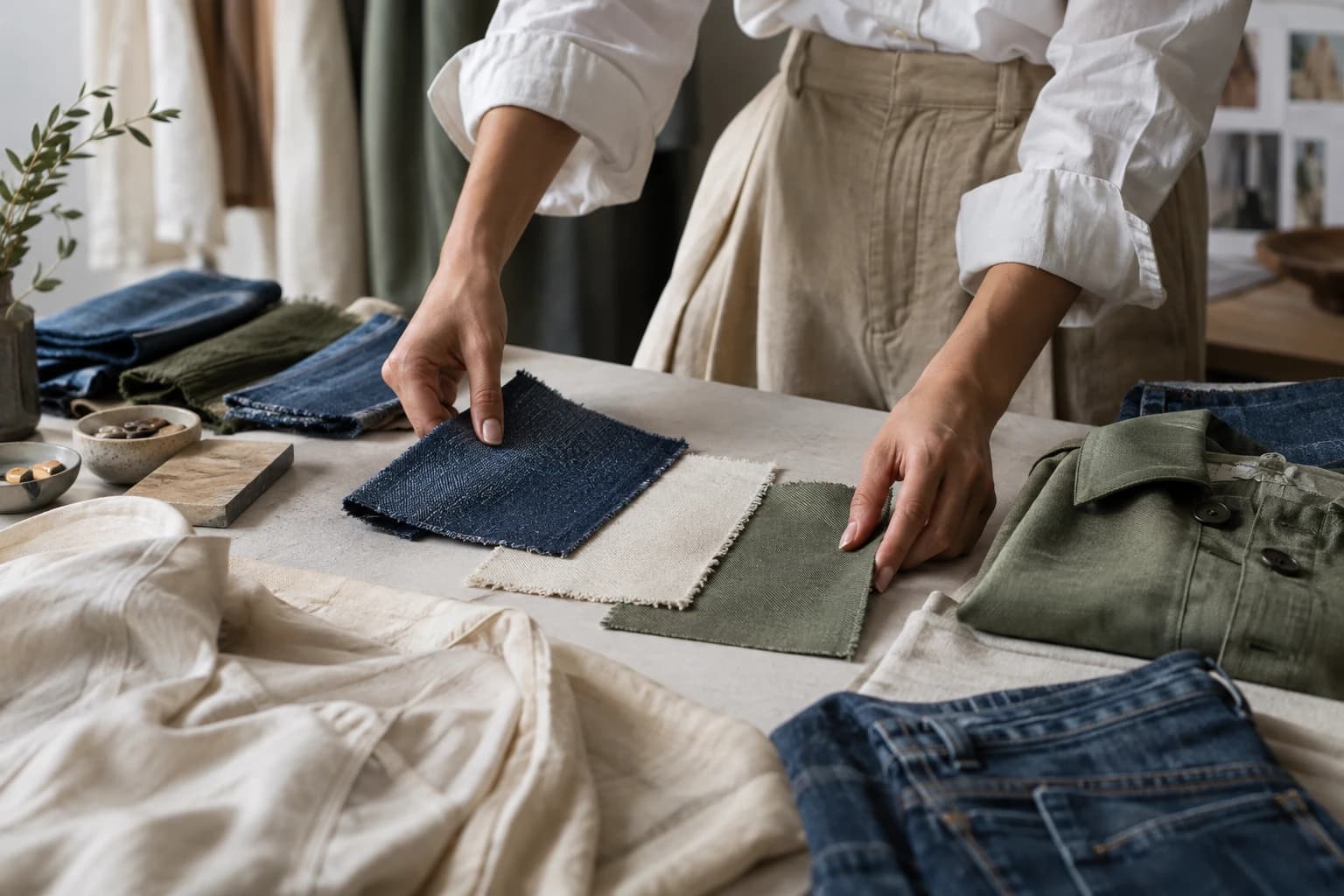
Product operations depend on reliable inputs
Administrative work often begins with structured facts: product codes, materials, dimensions, availability, and approved care information. A tool can help reorganise or draft from those facts, but missing information should remain visibly missing. Plausible guesses can become costly once they travel into listings or supplier communication.
Start with a small product set and compare outputs against the source records. Check whether a correction in the source can be carried through to the derived material. If the process creates several disconnected copies of the truth, it may add maintenance work even while reducing initial typing.
Merchandising connects the product to its presentation
Images, descriptions, collection order, and styling work together. An AI-assisted image process should therefore be judged in the context of the product page, not only in a generation interface. The garment needs to remain accurate, and the surrounding information needs to answer the questions the picture cannot resolve.

Treat customer-facing recommendations and personalised presentation with particular care. A useful suggestion depends on context and reliable information; a confident suggestion based on weak assumptions can frustrate shoppers. Begin with a transparent, bounded task and give customers a clear way to find the full range or correct a mistaken preference.
Build the map around accountability
Assign an owner to each use case and distinguish preparation from approval. A support draft should have a route for exceptions. A generated image should have a garment reviewer. A product-data transformation should have a source record that can be checked and corrected.
Evaluate each workflow using its actual purpose. For drafting, that might be approved completion time. For imagery, it might be the number of useful assets and the correction effort. For support, it might include resolution quality as well as speed. Pair a productivity measure with a quality check so improvements do not hide new problems.
You do not need to introduce AI everywhere to benefit from it. A careful map often reveals one or two practical opportunities and several areas where the existing process is already appropriate. Build around those findings, and let evidence from completed work determine what comes next.