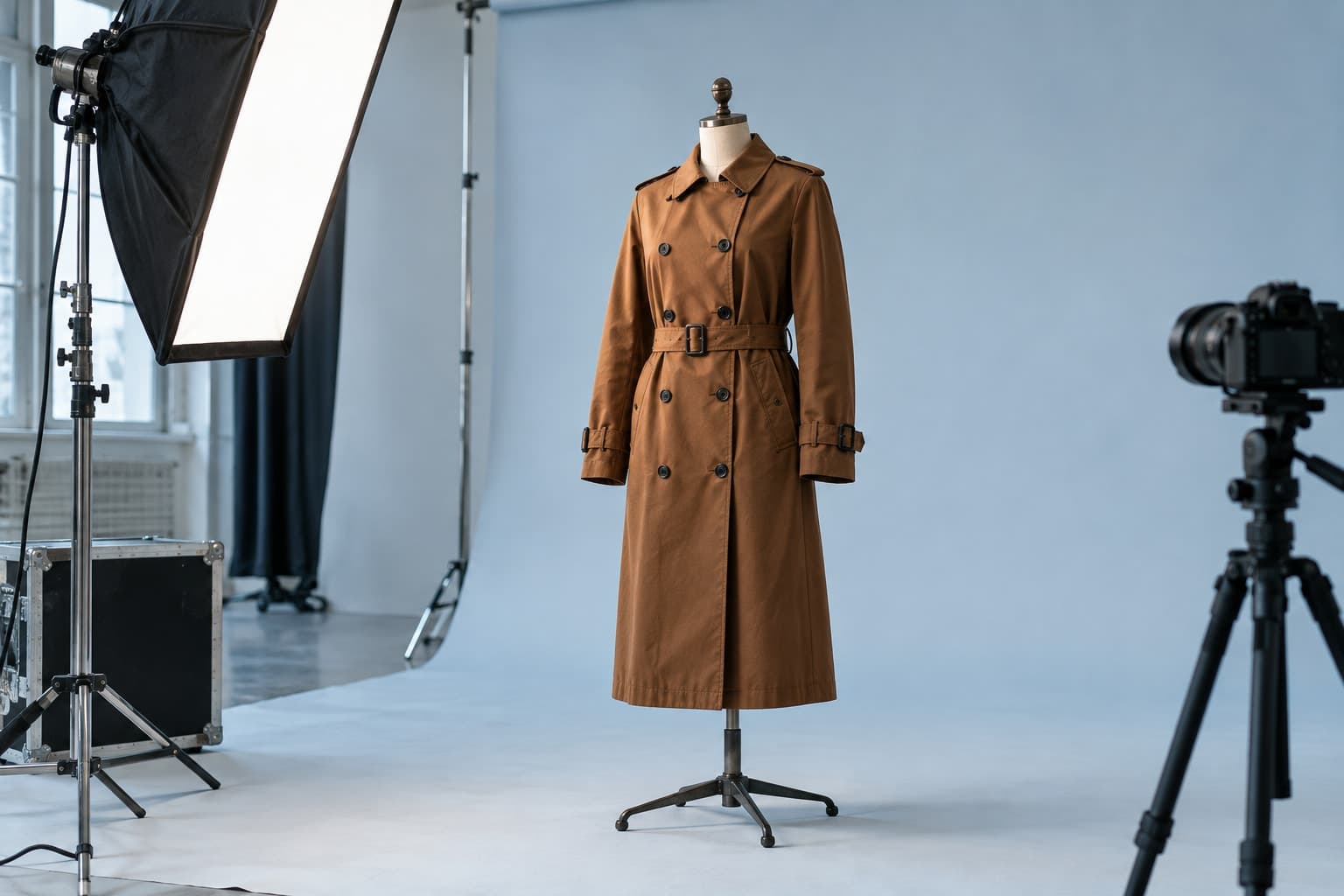
Write clear editorial disclosures that explain generated presentation without implying that it proves fit or fabric behavior.
The starting point
A shopper should not have to solve a visual puzzle to understand what an image represents. If a fashion picture uses generated presentation, explain the part that matters: whether the subject or setting is synthetic, whether the garment is based on a real product, and which images provide direct product evidence. A useful disclosure helps someone interpret the page.
Describe the process at the right level
Getty Images’ April 2024 report release said almost 90% of consumers wanted to know when an image was AI-generated. Its methodology describes four studies of adults across 25 countries, conducted from July 2022 to September 2023. This is historical survey evidence about transparency preferences, not a universal legal rule. Source: Getty Images’ original release.
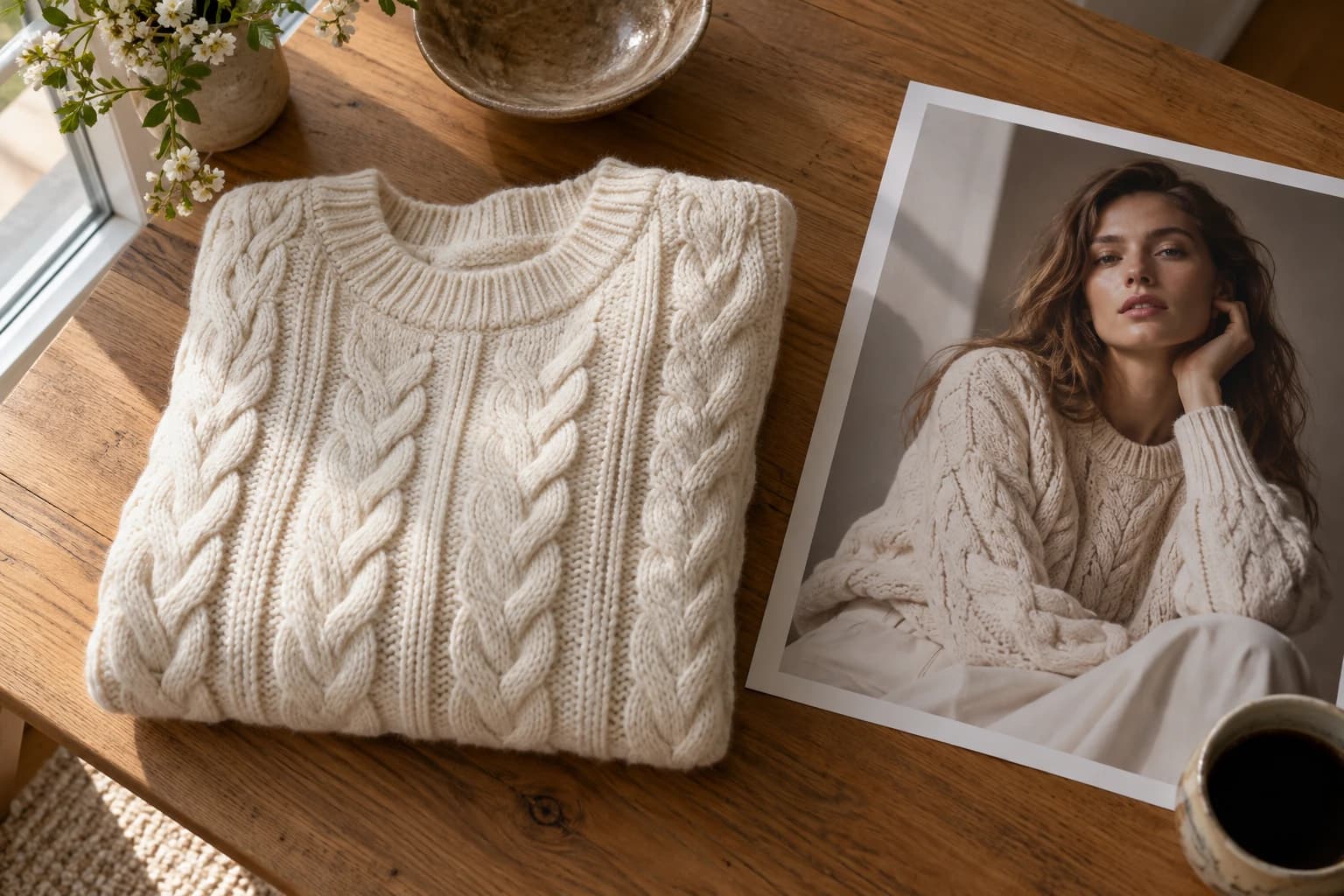
Avoid a vague label that says only 'enhanced.' It could mean a crop, a color correction, or an entirely generated scene. Use language that reflects what actually happened. 'AI-generated editorial illustration' suits a concept image. A product image needs a more specific description if the garment was transferred into a generated presentation.
Do not claim that an image is a faithful product representation until the team has checked it. A disclosure does not repair an incorrect neckline, invented pocket, or misleading fit impression. Accuracy review and explanation serve different purposes, and both belong in the workflow when generated imagery appears beside merchandise.
Put the explanation where it helps
Choose a location that remains connected to the picture: a caption, a nearby information note, or a consistent gallery label. Keep the wording readable on mobile. If an image is exported into another placement, ensure the relevant explanation travels with it. A note buried on an unrelated page may not help the person viewing the asset.
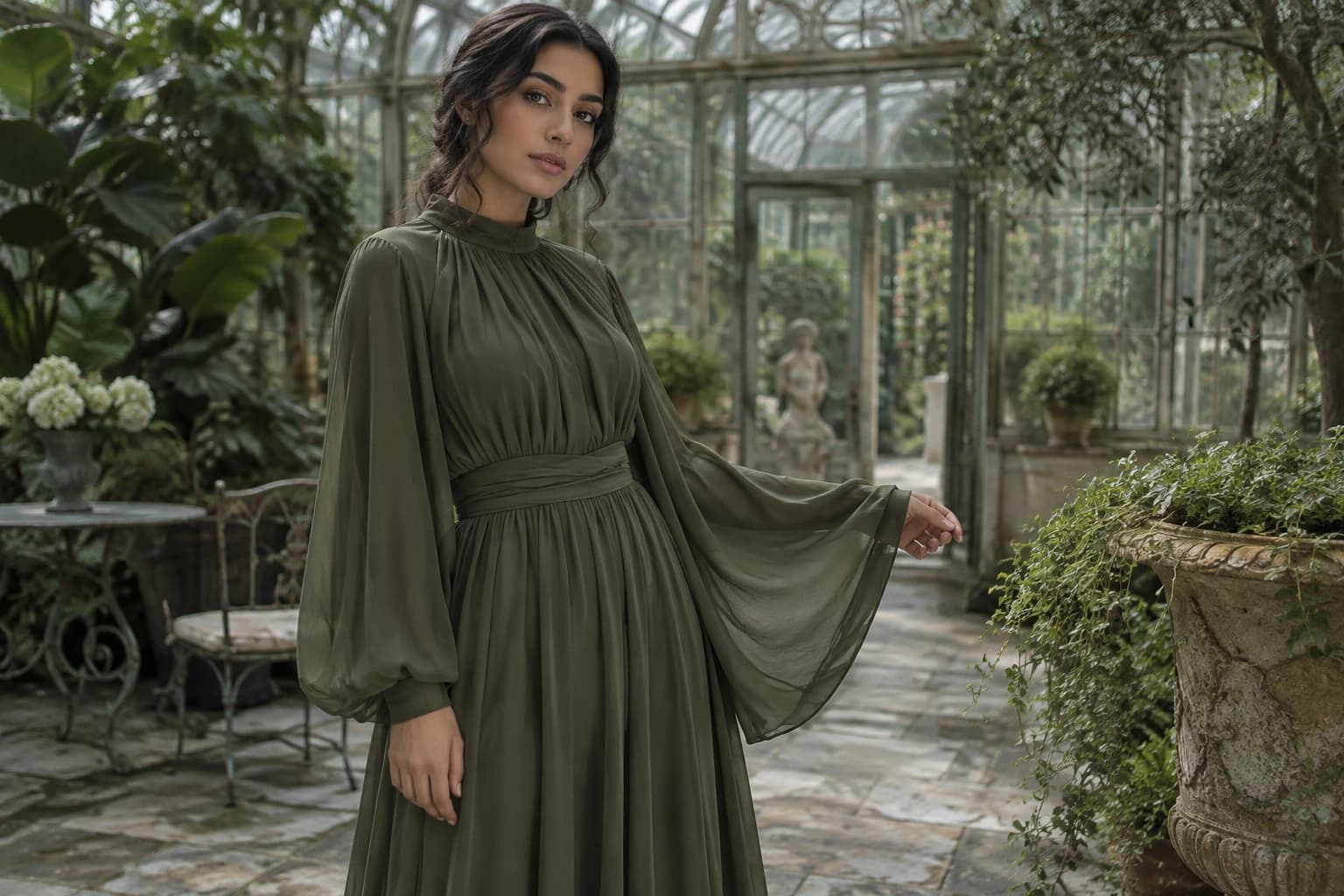
For a hypothetical dress listing, actual front and back product photographs could sit alongside a generated campaign illustration. The caption can identify the illustration and point to the product views for construction details. This gives the shopper a clear way to distinguish mood from evidence without requiring a long technical description.
Separate visual context from personal experience
A synthetic subject is not a customer who tried the clothes. Do not pair that subject with an invented review, a fabricated name, or a first-person account of comfort. If you use a real customer's words, represent their identity and experience accurately and secure the relevant permissions for that use. Generated presentation should not create a false witness.
The same distinction matters in video. Simulated movement may create atmosphere, but it does not automatically demonstrate a material's drape, stretch, or durability. Describe an animation according to its actual purpose. Use direct product evidence when the content is intended to establish a physical property.
Make disclosure part of the asset record
Store the production method, source references, review status, and approved wording with the final file. Give the person publishing the page enough information to choose the correct label. If the asset changes materially, review the wording again. A new crop or composite may remove the context that made the original caption sufficient.
Ask a colleague unfamiliar with the project to read the page and explain what they think is real, generated, and demonstrated. Their answer can reveal ambiguity that the production team has stopped noticing. Treat this as an editorial clarity check, not as proof that every legal requirement has been satisfied.
This guide proposes a communication practice rather than a universal compliance rule. Applicable obligations and platform requirements need their own current review for the places you operate. The editorial principle is straightforward: give people an accurate description of the image's role, preserve trustworthy product information, and avoid implying an experience or performance that the picture cannot establish.
Research & sources
These findings describe the named studies and companies. They provide context, rather than measuring Atellia or establishing the effect of the advice above. Source dates are separate from retrospective theme years.
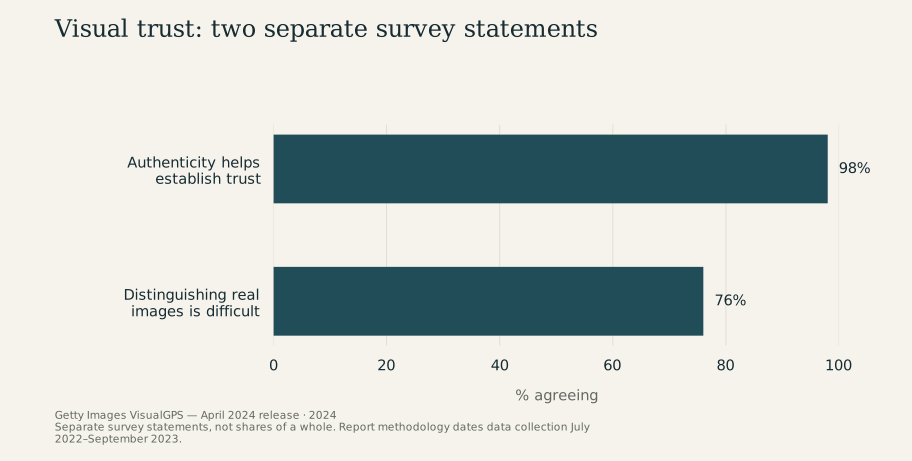
Visual trust: two separate survey statements
2024 · % agreeing
View chart data
| Measure | % agreeing |
|---|---|
| Authenticity helps establish trust | 98 |
| Distinguishing real images is difficult | 76 |
Study scope and numerical references
- Consumers wanting to know whether an image used AI: 90 percent (approximate: almost 90%). Release published April 30, 2024; methodology: four studies July 2022–September 2023, 7,500 adults per survey, 25 countries Getty Images VisualGPS, 2024
- Respondents agreeing authentic visuals help establish trust: 98 percent. Historical consumer attitudes, not an outcome measure Getty Images VisualGPS, 2024
- Respondents agreeing distinguishing real images is becoming difficult: 76 percent. Historical consumer attitudes Getty Images VisualGPS, 2024