
Review synthetic fashion imagery through product fidelity, representation, continuity, and publication context.
The starting point
A synthetic fashion image can look convincing at first glance and still be unsuitable for a store. Product details may change, a pose may hide necessary information, or the presentation may imply something the brand cannot support. A written quality standard helps the team distinguish visual polish from a publishable asset. Begin with the shopper's decision, then inspect the image.
Check the product as a set of specific features
Compare the output with clear source photographs. Review silhouette, length, closures, seams, print placement, texture, and any distinctive hardware. Do not rely on a general impression that the garment looks similar. Mark features that cannot be verified from the available references and obtain better evidence before approving the image for product use.
Create category-specific checks. A plain sweatshirt, a lace dress, and a patterned jacket present different risks. For a hypothetical striped shirt, the review might include stripe direction, spacing, alignment at the placket, and continuity around the sleeve. A checklist should reflect the actual garment rather than become a generic form no one reads.

Review people with the same care as products
Inspect hands, posture, proportions, facial continuity, and the relationship between the subject and the clothes. Review the collection as a contact sheet to notice repetitive casting choices. Representation should be considered across the visual program and through the people involved in making decisions, rather than treated as a last-minute selection from a menu.
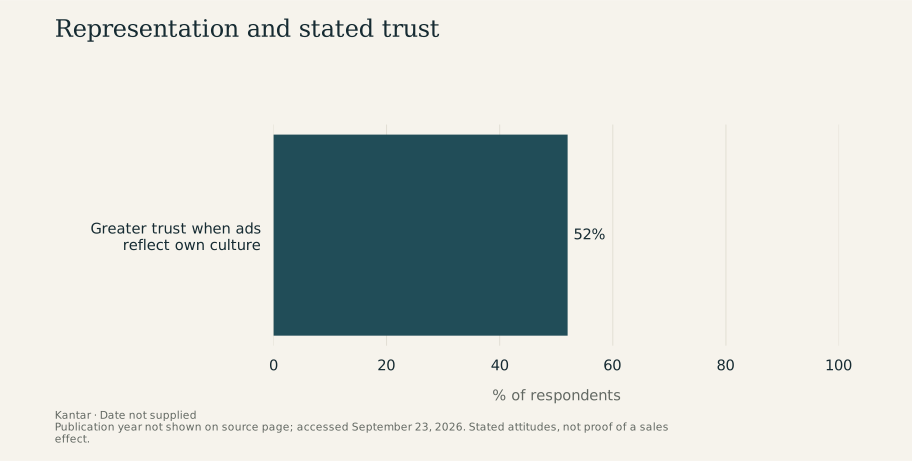
Kantar reports that 52% of consumers in its cited research expressed greater trust when advertising reflected their culture. That finding concerns respondents' stated attitudes; it does not guarantee a conversion lift from changing a model. The useful implication is to take authentic representation seriously and evaluate your own work thoughtfully. Source: Kantar's research on diversity in advertising.
Check continuity across the set
Review related images together for changes in garment color, styling, subject appearance, and lighting. A product gallery can become confusing when each image is plausible but the series does not describe the same item consistently. Compare front and back views carefully; a convincing invented rear construction is still incorrect.
Record which differences are intentional. A campaign may use several subjects or environments, while a product sequence may require a tighter visual system. The standard should serve the project rather than force all imagery into one look. A clear brief gives reviewers a basis for that distinction.

Approve the placement as well as the file
An image can be suitable as a labeled editorial illustration and unsuitable as direct evidence of fit or fabric behavior. Store the approved use with the final file. Include any required caption or explanation so that a later editor does not reuse it in a stronger context without another review.
Establish a reject path for unresolved product errors. Repeated generation is not always the answer; an accurate existing photograph, a new source capture, or a different composition may serve the customer better. Keep those alternatives available instead of allowing a deadline to redefine accuracy.
A useful standard leaves a short record: source reference, reviewer, decision, reason, and approved placement. It makes the next review faster because the team can see what mattered before. The objective is consistent judgment that survives beyond one person's ability to spot a problem.
Research & sources
These findings describe the named studies and companies. They provide context, rather than measuring Atellia or establishing the effect of the advice above. Source dates are separate from retrospective theme years.
Representation and stated trust
Source date not supplied · % of respondents
View chart data
| Measure | % of respondents |
|---|---|
| Greater trust when ads reflect own culture | 52 |
Study scope and numerical references
- Consumers reporting greater trust when ads reflect their culture: 52 percent. Stated attitudes in Kantar's cited consumer research; publication year not displayed; not a conversion lift Kantar