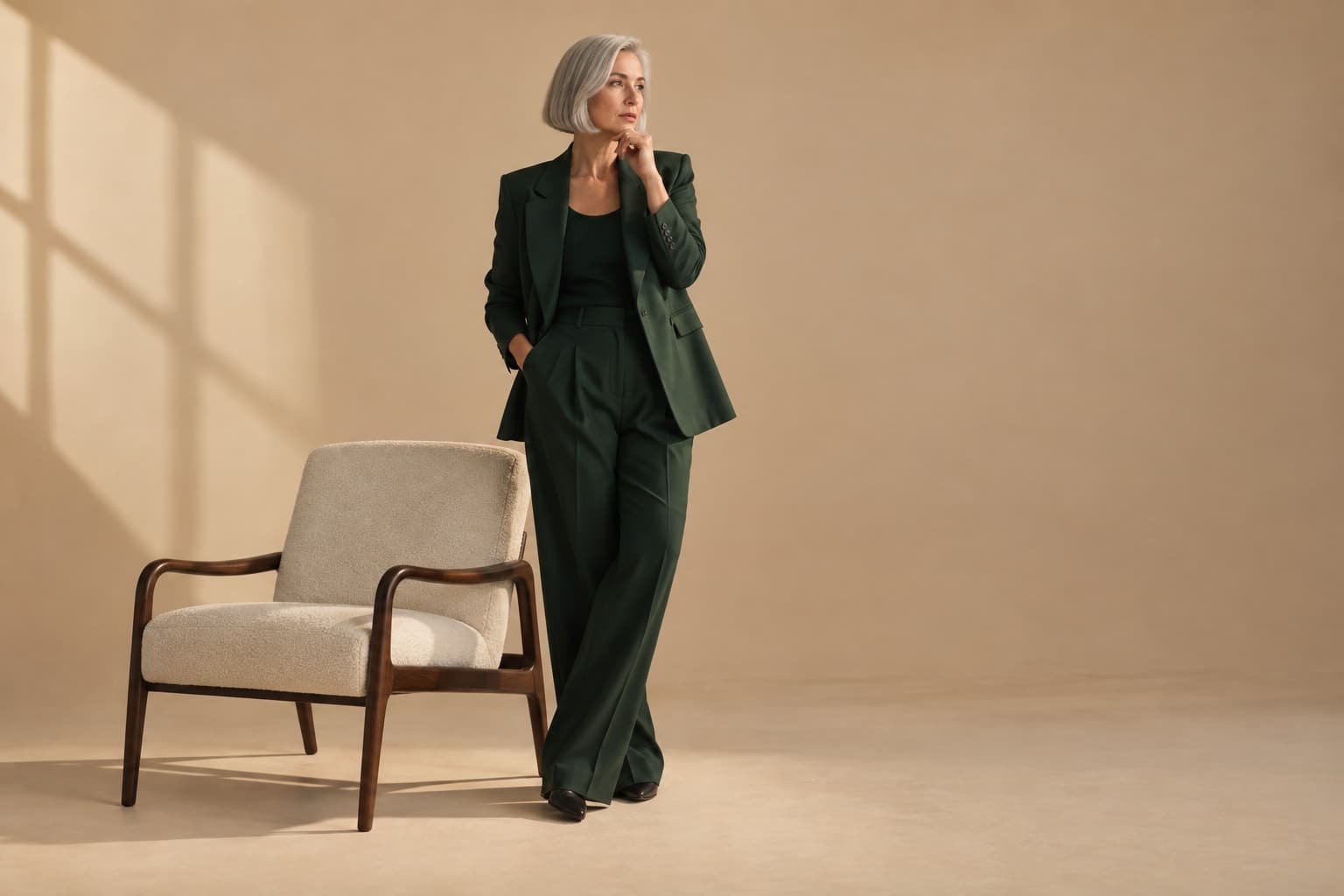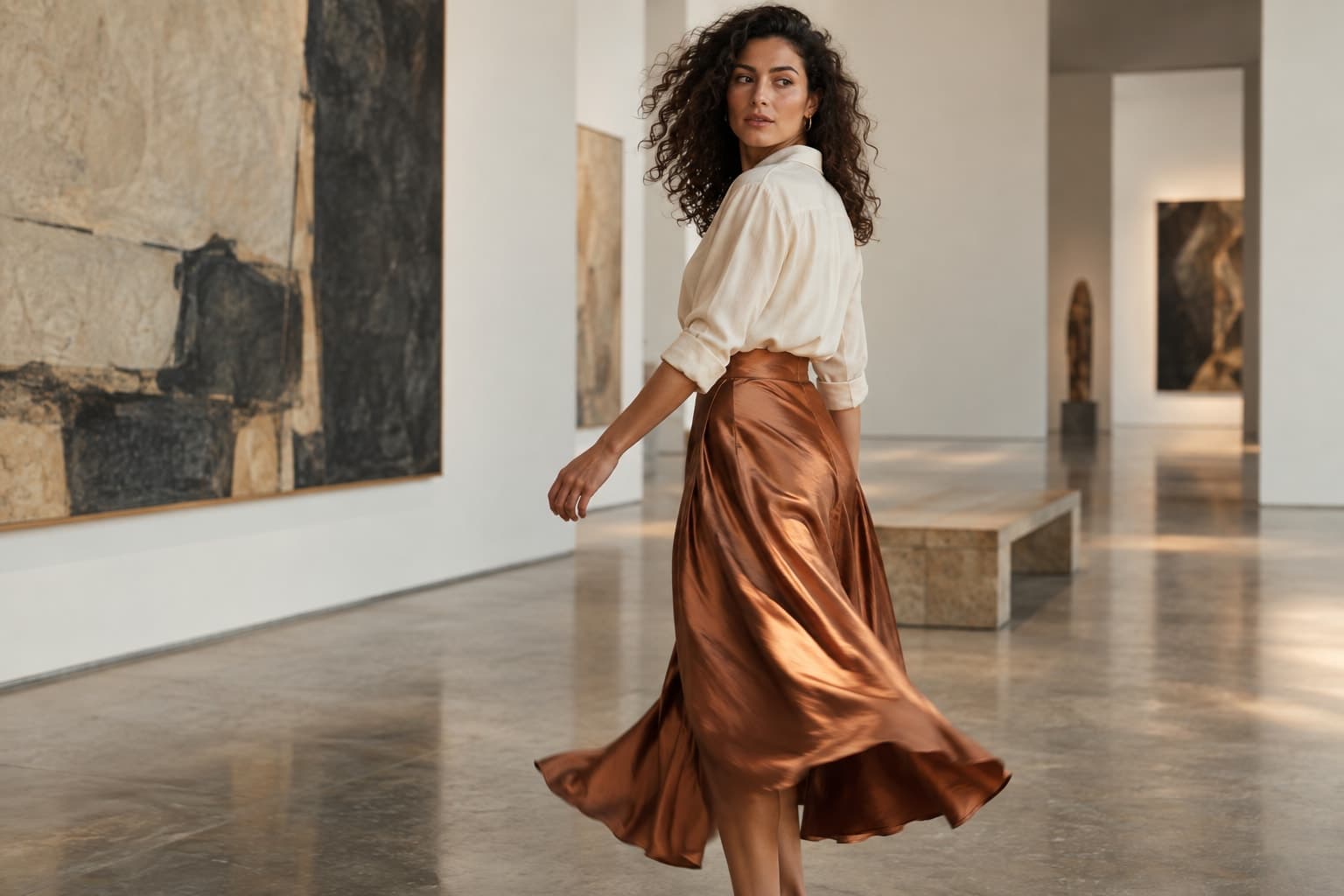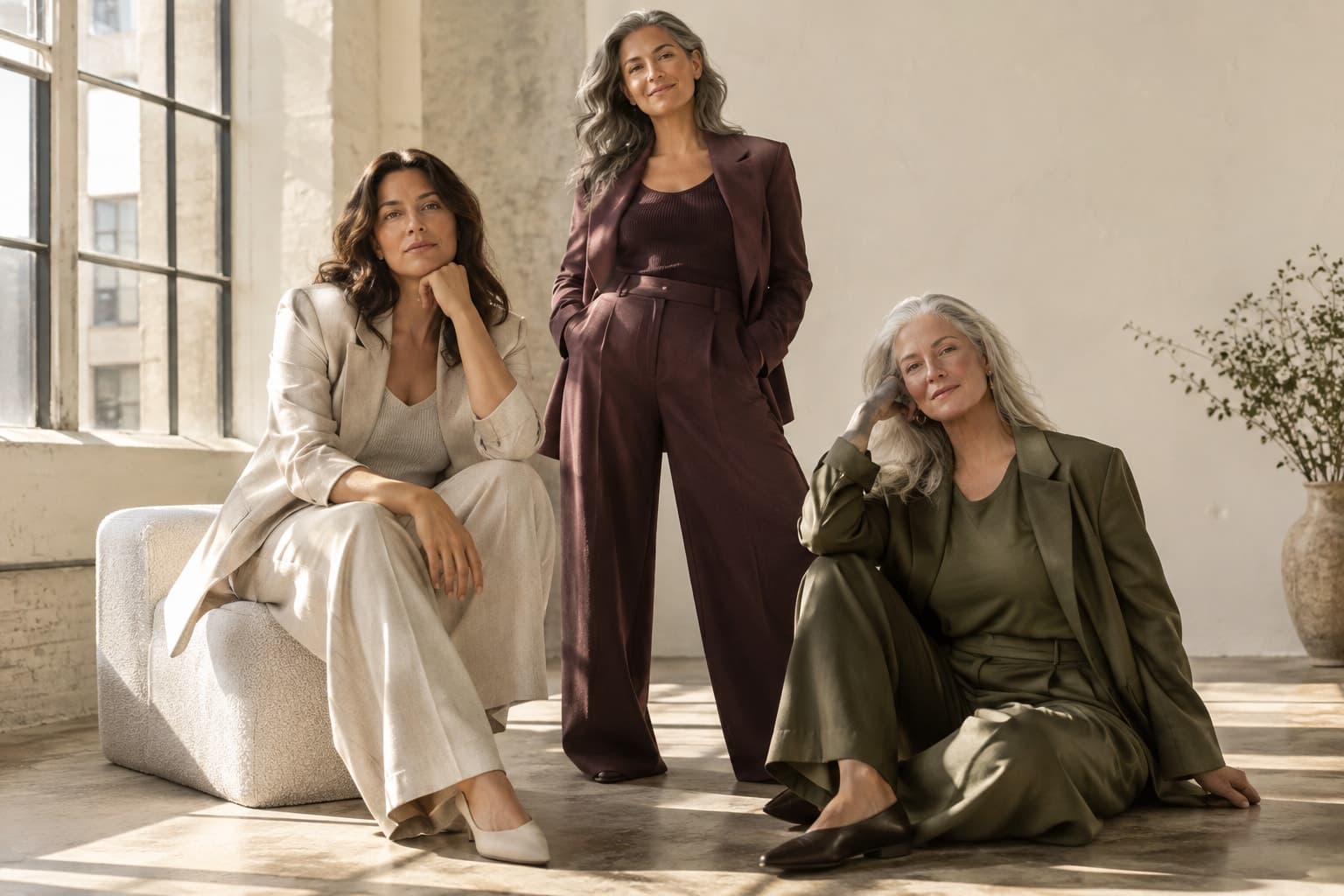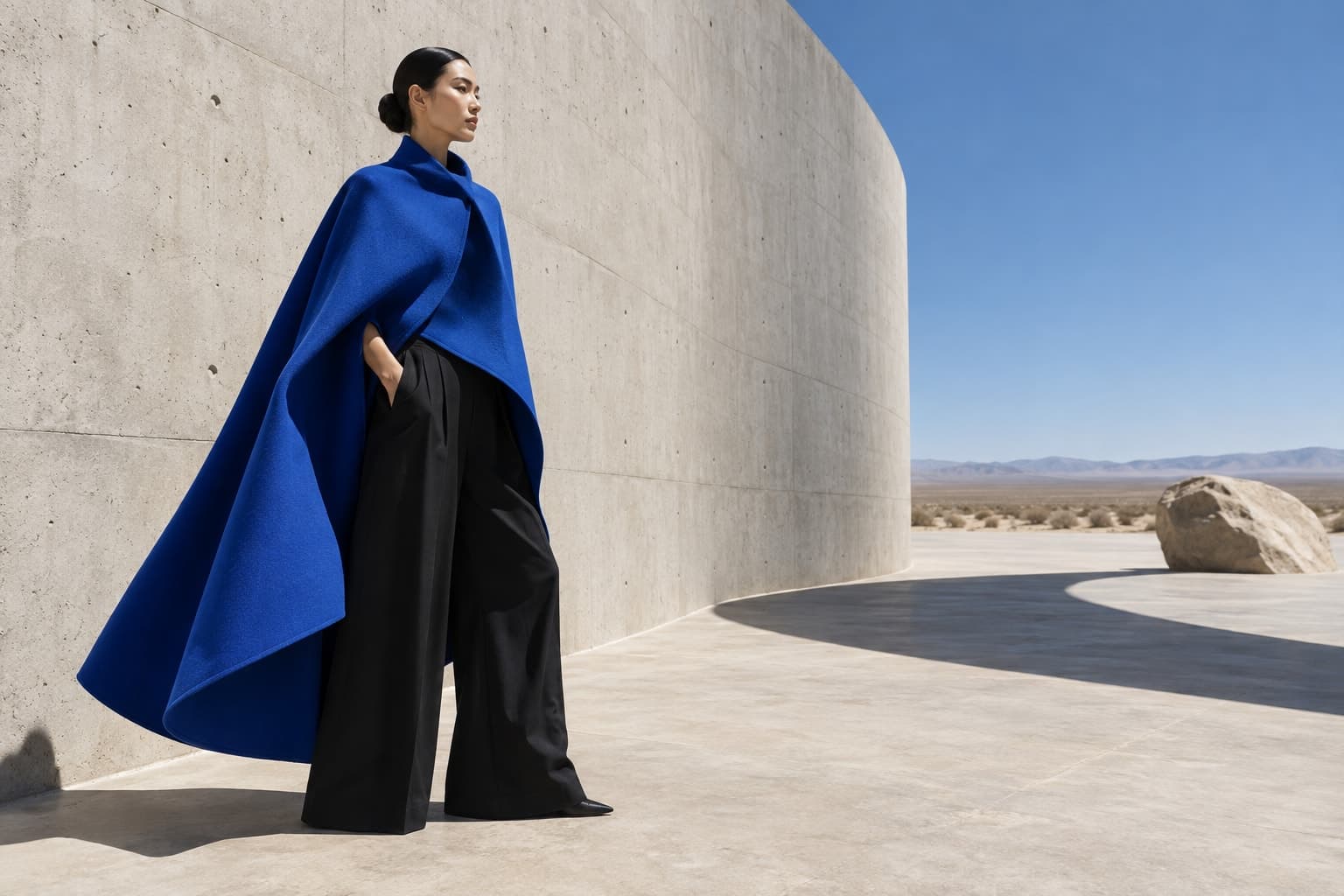
Explore scale, repetition, and unexpected setting as original campaign ideas while keeping the garment at the centre.
The starting point
A bold campaign does not need to be crowded. Often its strongest quality comes from one decision pushed far enough to become unmistakable: an unusual sense of scale, a repeated gesture, or a setting that changes how a familiar garment is read. The discipline is to choose the idea before adding decoration.
Use the three directions below as starting points for your own brief. They are hypothetical creative exercises, not instructions to reproduce an existing brand's campaign. For each, define the hero garment, the information it must preserve, and the destination where the image will appear.
Direction one: make scale the story
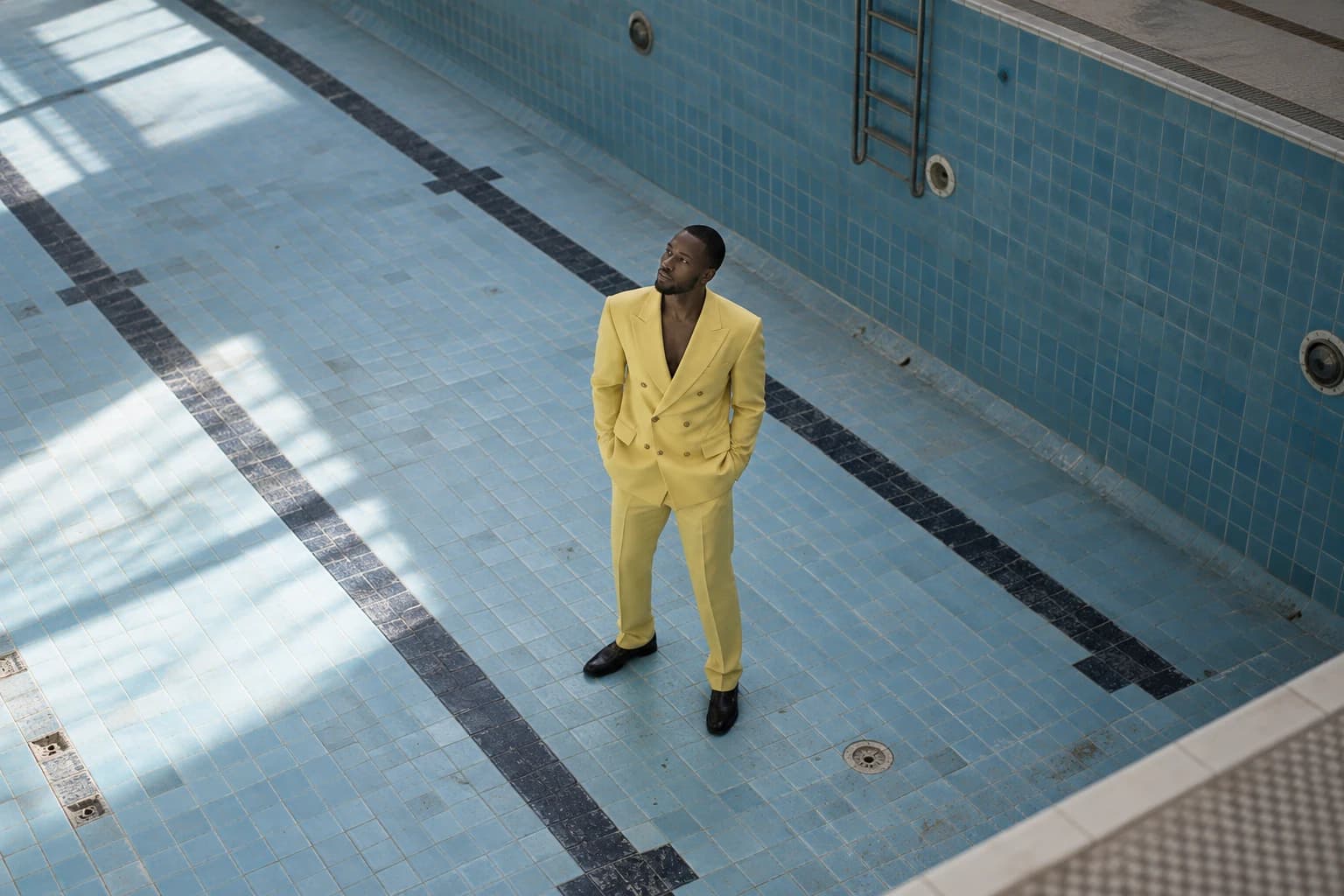
Place an ordinary garment within an unusually expansive composition. A person in a sharply cut jacket might occupy a small part of a broad, quiet architectural frame. The space creates a feeling of independence or anticipation, while a companion image moves close enough to explain the tailoring.
The practical challenge is product legibility. If the image will be a small advertisement, the garment may disappear. Plan the wide frame for a destination that can support it, and produce a closer crop with its own composition. Do not simply enlarge the distant subject until the setting loses its purpose.
Direction two: repeat with a reason
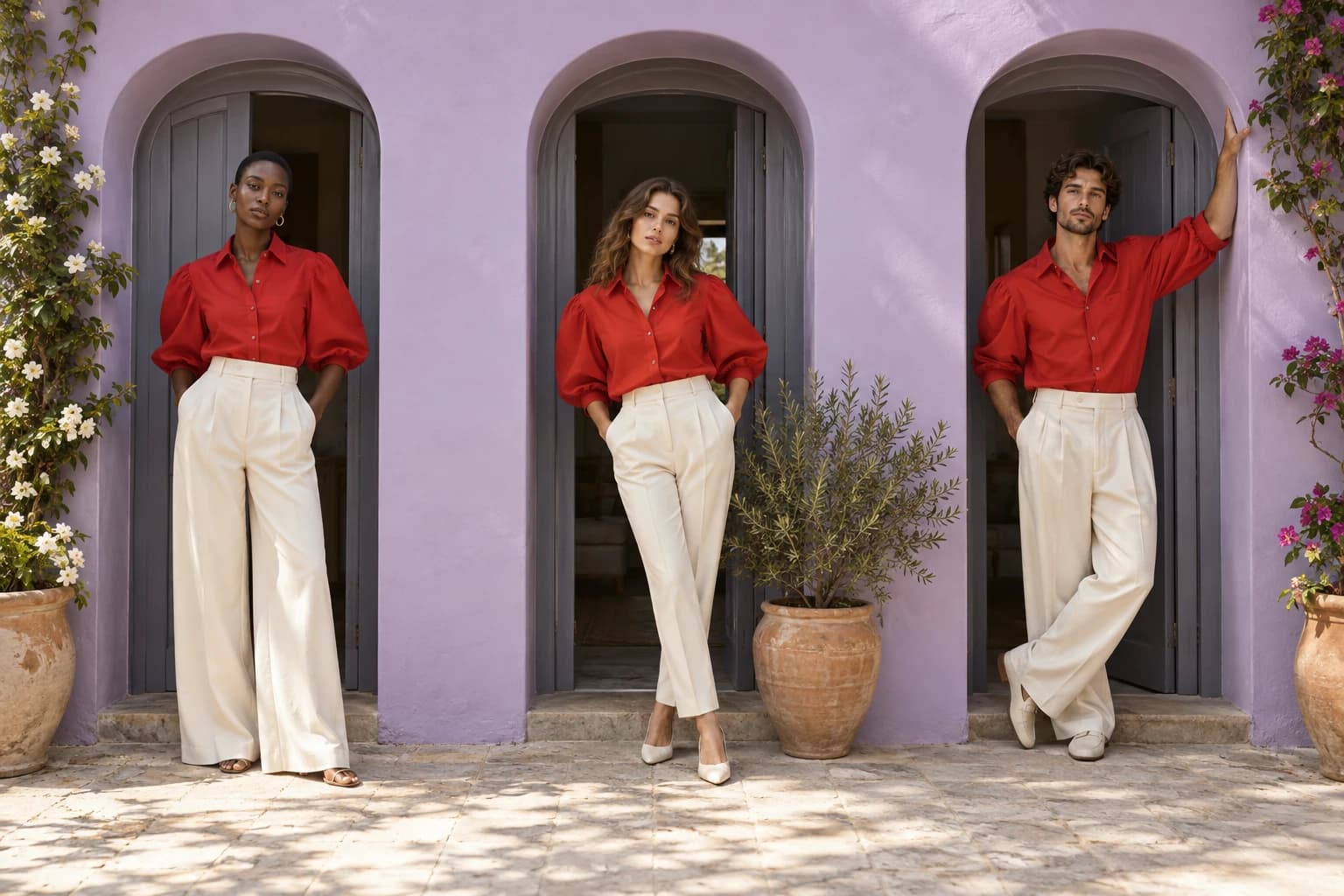
A sequence of related poses or outfits can reveal a collection's range. Imagine several frames of the same simple action, each with a different layer or silhouette. The repetition gives the reader something stable, making the differences between garments more noticeable.
Keep camera distance, background treatment, and gesture consistent enough for the comparison to work. Then choose one deliberate variation, such as a change in colour or volume. Too many simultaneous changes turn a sequence into a collage without a clear idea. Review the set together before approving any individual favourite.
Direction three: move the familiar into an unexpected setting
A practical garment can feel newly expressive when placed somewhere that changes its context. A hypothetical workwear capsule might be photographed in a quiet gallery-like space, letting pockets, seams, and utilitarian shapes become the visual subject. The contrast comes from the setting, not from altering the garment.
Make the relationship between product and location explainable in one sentence. If the only reason for a scene is that it looks expensive, the idea may need more work. Consider the collection's materials, the intended occasion, or the brand's point of view as a more useful starting point.
Build a small image family
For the chosen direction, plan a hero frame, a supporting full view, and a detail. The hero introduces the idea; the supporting view makes the product easier to understand; the detail rewards closer attention. Give each image a distinct role so the campaign can travel across formats without becoming repetitive.
When using generated imagery, preserve the product reference and review the scene for invented details or misleading implications. A dramatic location should not imply a technical capability the garment does not have. The creative idea can be ambitious while the product remains accurately represented.
Finish with a ruthless edit. Remove the prop, pose, or visual effect that contributes the least. If the concept becomes clearer, you have found the right direction. Boldness comes from a choice the audience can feel immediately, not the number of choices packed into the frame.