Set the product, casting, light, composition, and approval rules before generating a fashion image.
The starting point
A strong image brief creates a small world with clear rules. It tells the team what the photograph is for, what the garment must communicate, and which choices are open to interpretation. The same discipline helps when part of the image is generated. More descriptive words do not necessarily create more control; clear priorities do.
Start with the destination. A collection banner, a product gallery, and a social advertisement need different compositions. Write one sentence describing the job: “Introduce the new tailoring collection while keeping the jacket's shape legible on mobile.” That sentence becomes a useful test whenever a visual decision threatens to take over.
Set the product hierarchy
Identify the hero product and the supporting items. If the jacket is the subject, an elaborate bag should not dominate the frame. If a print is the selling feature, do not hide most of it beneath a scarf. Keep the garment reference close to the brief and list its non-negotiable details.
For a hypothetical charcoal suit, those details might include a single-breasted front, a specific lapel width, and straight trousers. Separate them from styling preferences such as a pale shirt or simple shoes. A reviewer can then distinguish an accuracy failure from a creative choice that merely needs discussion.
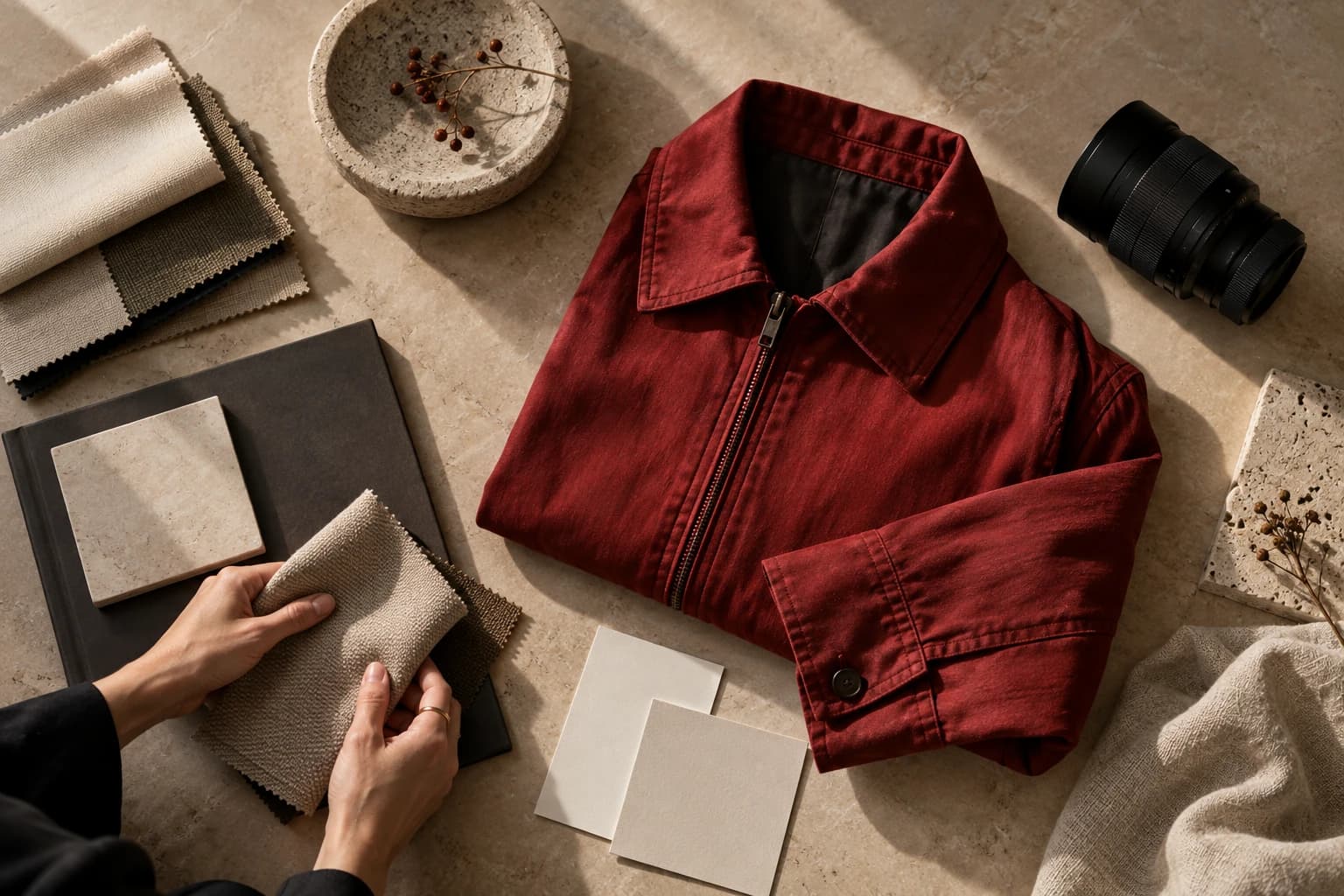
Describe the light through its effect
Instead of stacking aesthetic labels, say what the light should reveal. Soft directional light might describe the shoulder without flattening the fabric; a brighter background might separate a dark sleeve. If a dramatic shadow hides the closure, decide whether the frame can still perform its intended job.
Specify the overall contrast and background relationship in plain language. Keep a short reference board with notes explaining the quality you want from each image. The notes matter: one reference might be useful for its crop and another for its colour relationship. Without that explanation, the team may reproduce the wrong feature.
Make casting and pose purposeful
Choose a casting direction that suits the collection and treats the subject as a person within the scene. Describe posture, energy, and interaction with the garment. Avoid reducing the brief to demographic checkboxes or treating appearance as shorthand for personality. A relaxed pose can be described directly.
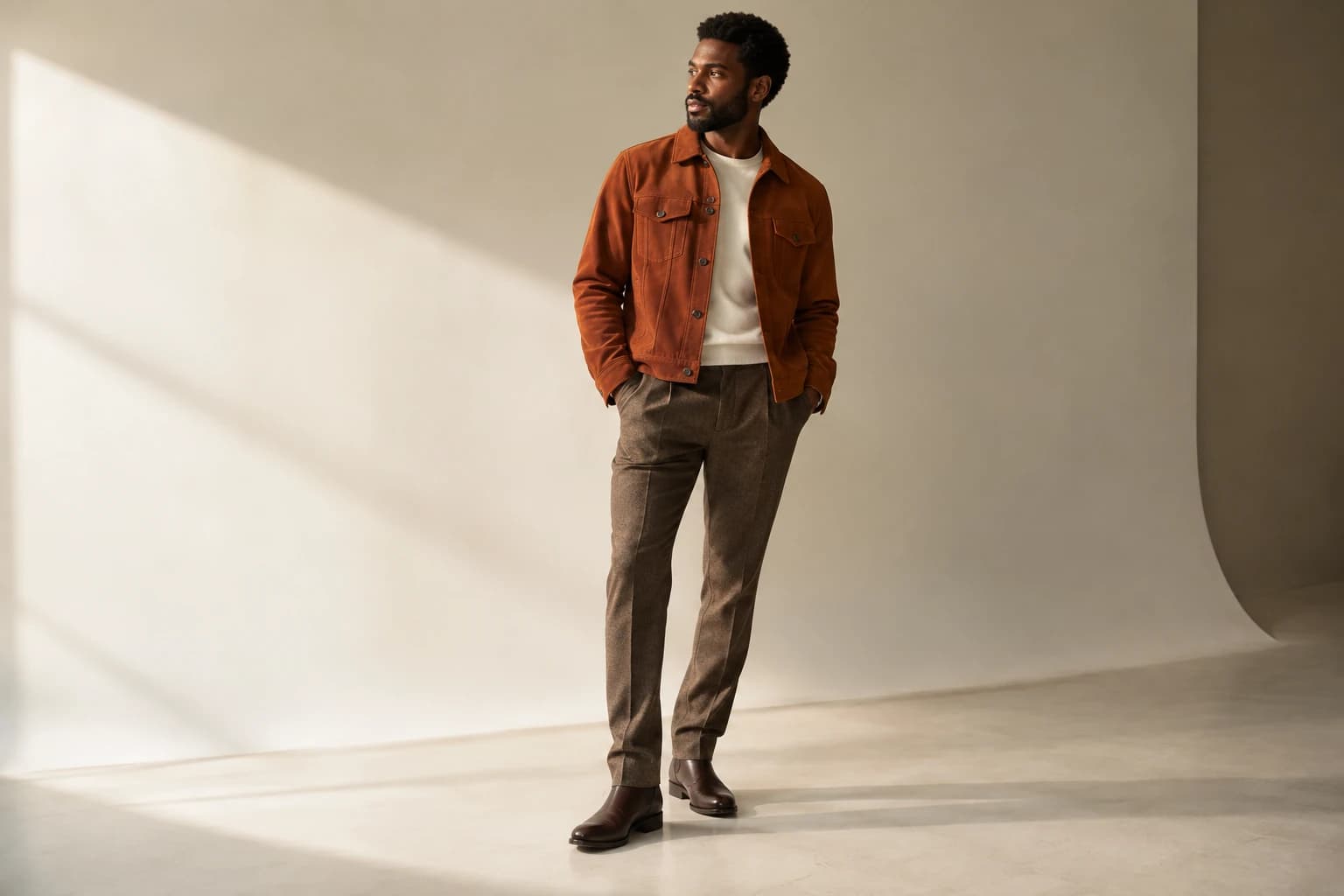
Use a pose that preserves the information the destination needs. Hands in pockets may communicate ease but obscure pocket construction. A seated position may suit an editorial story while changing how trousers appear. Include a simpler companion view when the expressive pose leaves useful product questions unanswered.
Define the approval order
Review the garment first, then the composition, then the finishing details. This order prevents a polished scene from distracting everyone from an incorrect product. If the garment is wrong, return to the source or change the method before spending time refining the background.
Keep approved references together with notes about rejected variations. Record why a direction failed: the hem disappeared, the crop became too tight, or the lighting shifted the apparent colour. Those observations turn the next brief into a more precise document instead of another attempt to describe a feeling.
For the first project, commission a small sequence rather than a complete campaign. A clear full view, a detail, and one expressive frame reveal whether the direction has enough range. Expand only after the sequence feels coherent. Art direction is the practice of making those choices visible, so each image contributes to the same story.
Research & sources
These findings describe the named studies and companies. They provide context, rather than measuring Atellia or establishing the effect of the advice above. Source dates are separate from retrospective theme years.
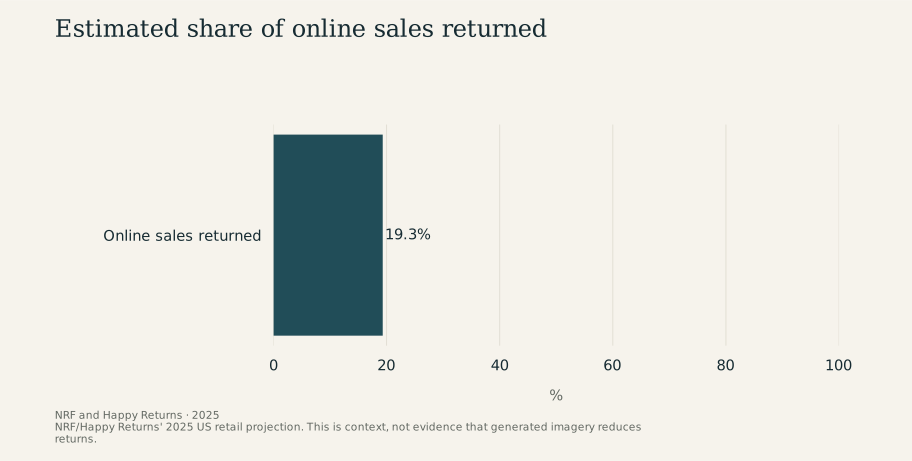
Estimated share of online sales returned
2025 · %
View chart data
| Measure | % |
|---|---|
| Online sales returned | 19.3 |
Study scope and numerical references
- Estimated online sales returned: 19.3 %. US retail, 2025 projection; not apparel-only or an image-effect estimate. NRF and Happy Returns, 2025