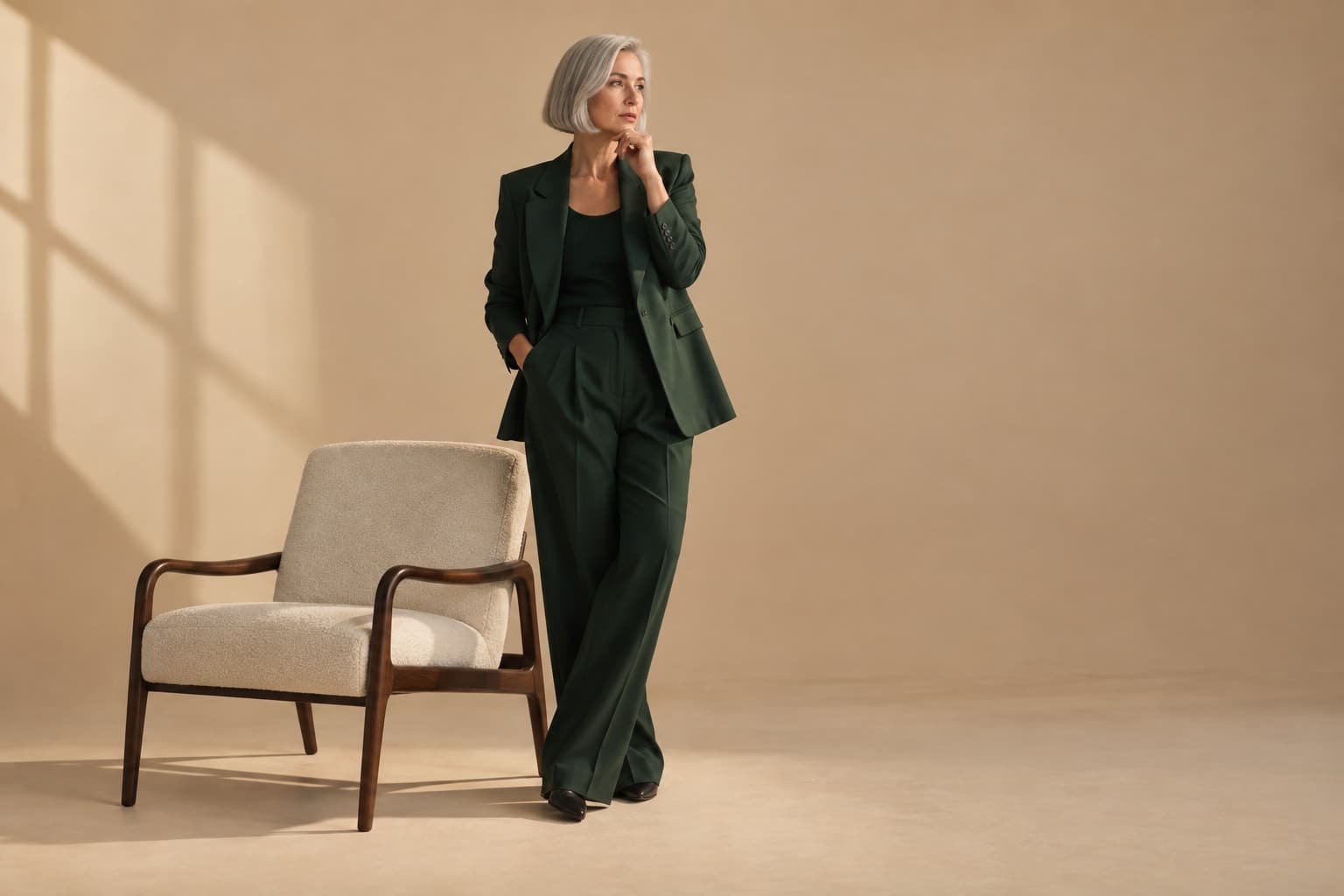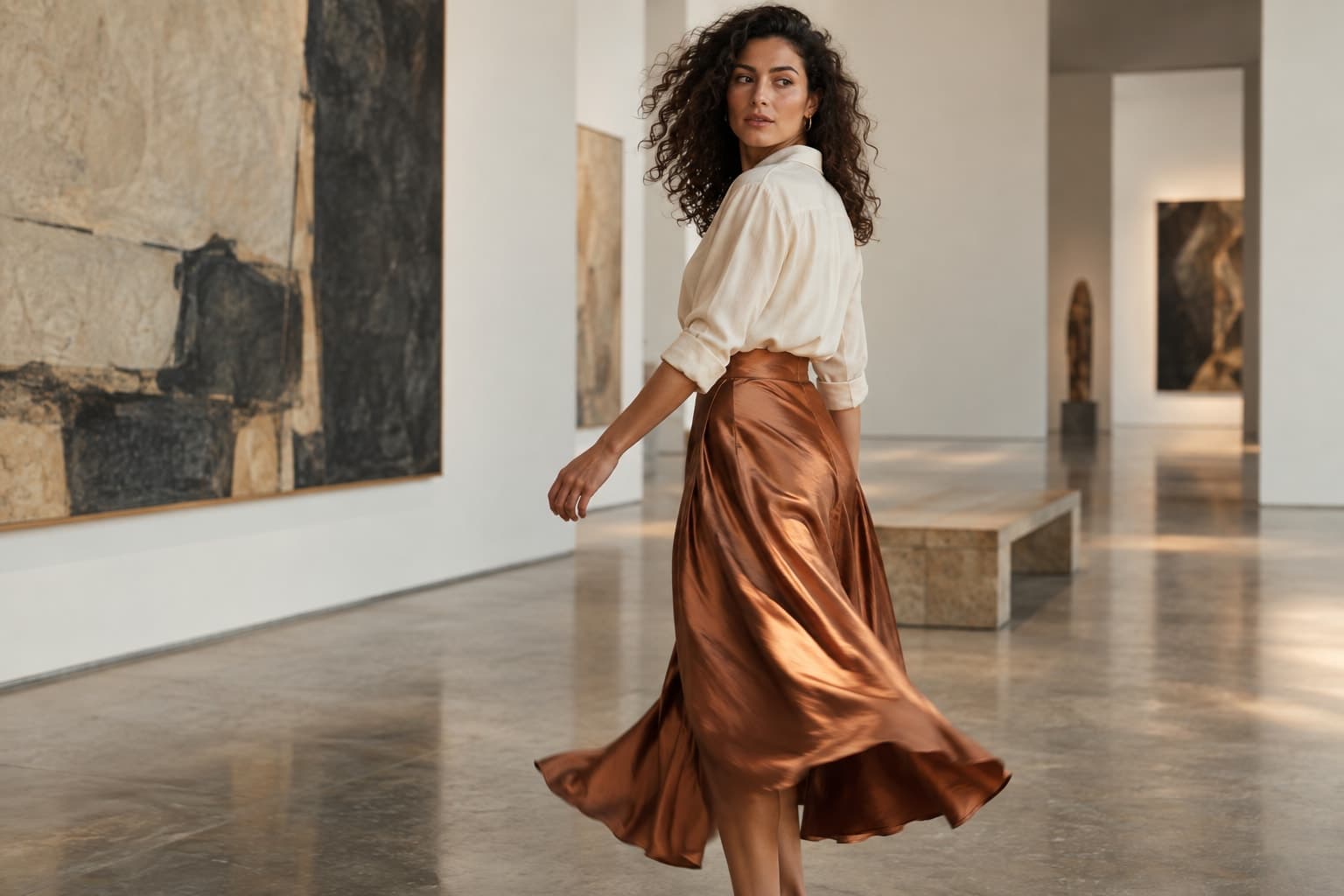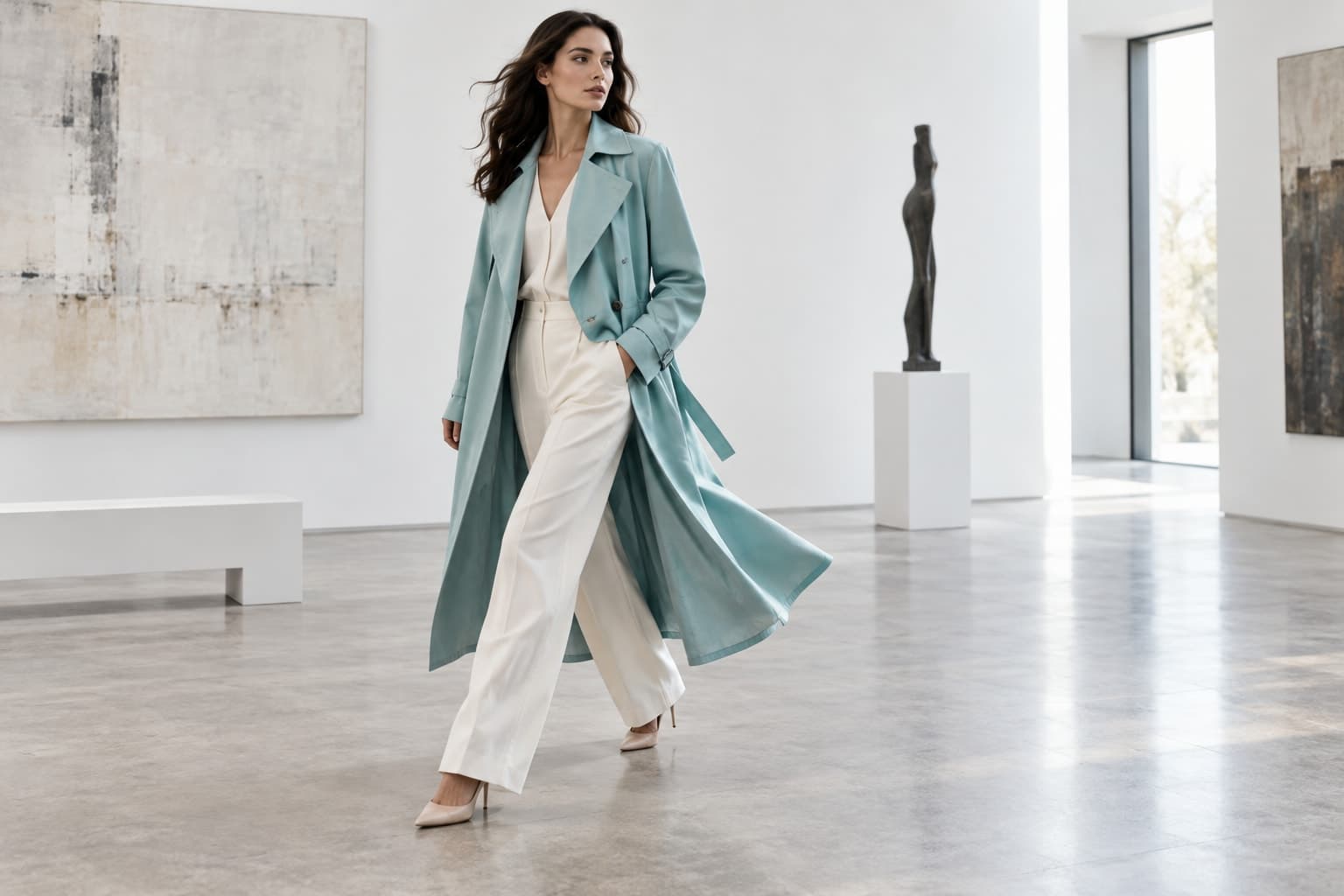
Plan a short fashion clip around one readable action, with practical checks for garment accuracy, loops, and silent viewing.
The starting point
A short fashion clip does not need to imitate a full campaign film. Five seconds can do one thing well: show a silhouette from another angle, reveal a fastening, or introduce a collection's atmosphere. Decide which of those jobs matters before choosing a camera move or animation effect. Motion becomes easier to judge when the intended information is clear.
Choose one action
Write the clip as a single sentence: an adult subject turns slightly to reveal the jacket's side profile, or the camera moves gently toward a textured cuff. Avoid combining a walking sequence, a full rotation, a dramatic zoom, and a background transition in one short shot. Multiple actions compete for the viewer's limited attention and create more details to review.
Start with a strong still frame. Check the garment, pose, crop, and background before attempting motion. If a pocket is already wrong or a sleeve is obscured, movement will not resolve the underlying problem. For product communication, the starting image should be an approved representation of the actual garment.
Make silent viewing complete
Design the essential meaning to survive without sound. If a clip introduces a new collection, a short title and clear product image may be enough. If it explains a construction detail, the framing should point to that detail rather than relying on narration. Keep any text away from edges and test it at the size people will actually see.
A silent first version also makes review more focused. The team can judge whether the visual sequence communicates on its own before music changes its emotional tone. Audio can be added later where appropriate, with the relevant permissions, but it should not disguise a confusing or visually inaccurate demonstration.
Distinguish atmosphere from evidence
Generated motion can propose how a scene might look, but it should not automatically be treated as evidence of a fabric's physical behavior or a garment's fit. A simulated skirt movement could be aesthetically convincing and materially wrong. Use actual footage when the purpose is to demonstrate stretch, drape, fastening, or another property a shopper needs to assess.
Review generated clips frame by frame as well as at normal speed. Look for changing buttons, unstable patterns, distorted hands, sliding hems, and background elements passing through the body. Small inconsistencies can be hard to notice during the first viewing because the overall movement attracts attention.
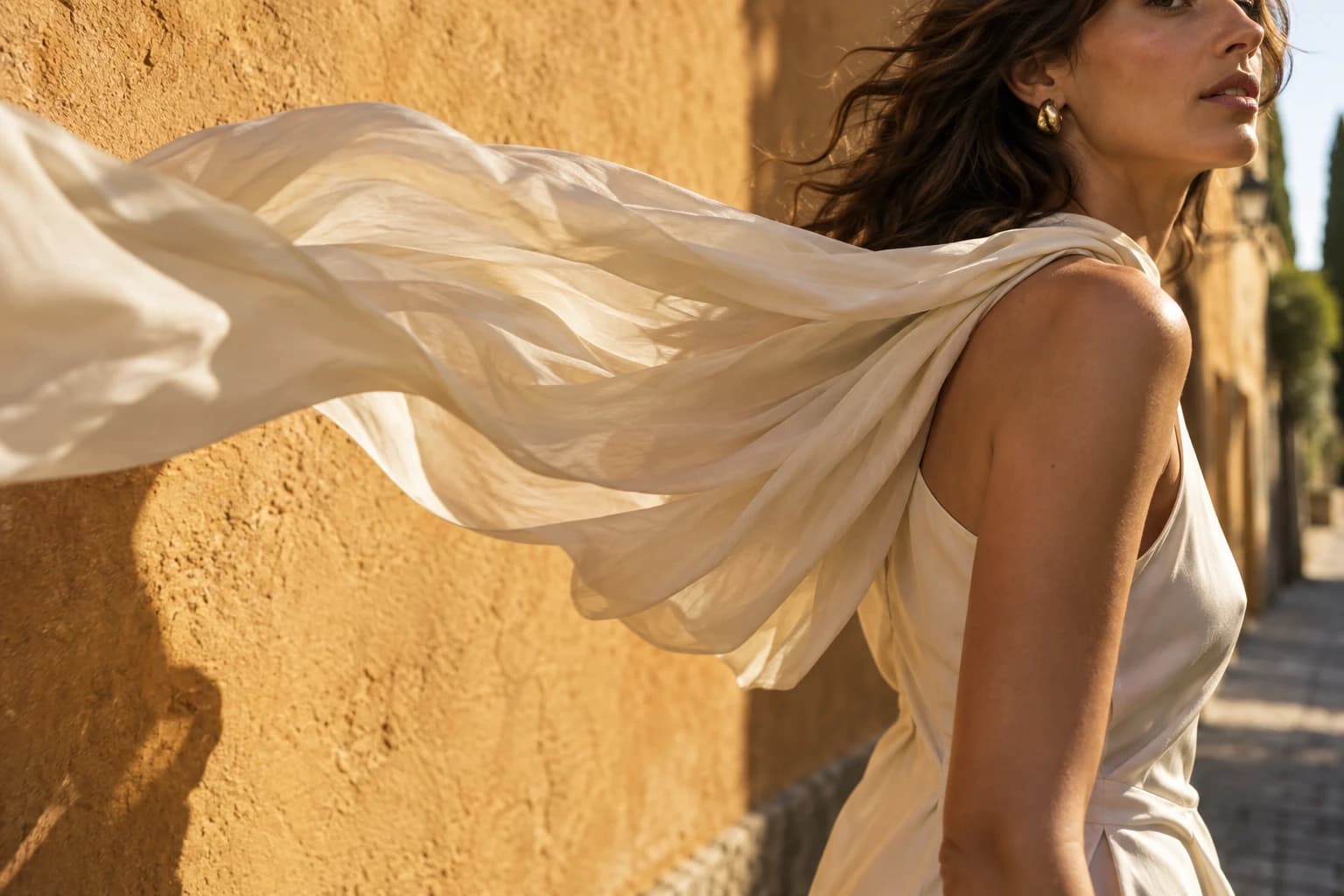
Approve the beginning and the end
Check the opening frame without playback. It may appear as the poster image, so it should work as a still. Then inspect the ending. A sudden cut halfway through an action can feel unfinished; a deliberate pause can give an editor a clean place to transition. If the clip loops, review the join several times rather than only watching from the beginning.
For a hypothetical knitwear launch, one version might hold on a neutral pose and use a small camera movement; another might show a gentle turn. Compare how clearly each presents the knit and neckline. The best version is the one that serves the chosen placement and question, not necessarily the one with more motion.
Save the approved master, a poster frame, captions where needed, and placement-specific exports together. Record whether the clip is actual footage or a generated illustration. That small production record helps the next person reuse the asset without making stronger claims than the original project supported.