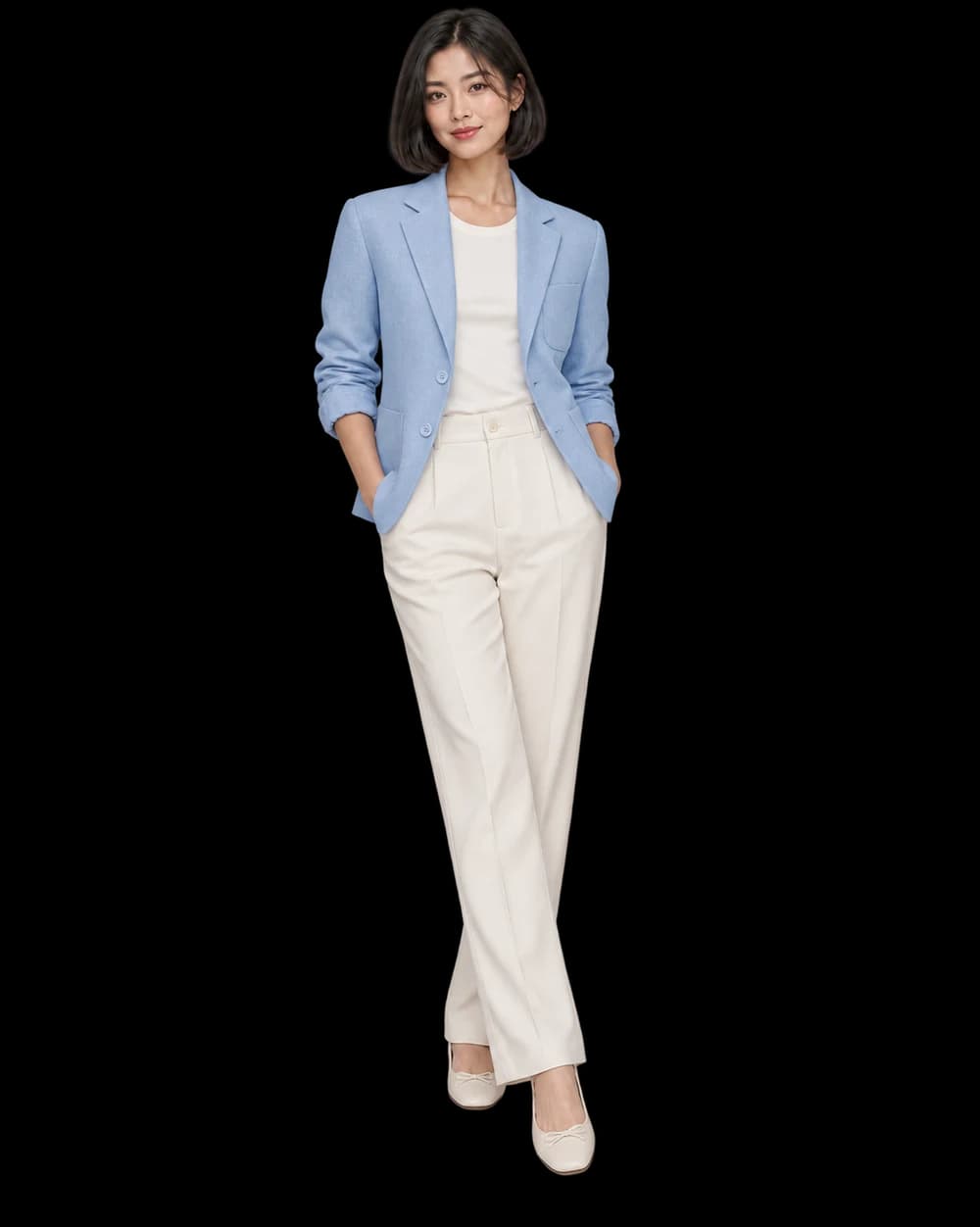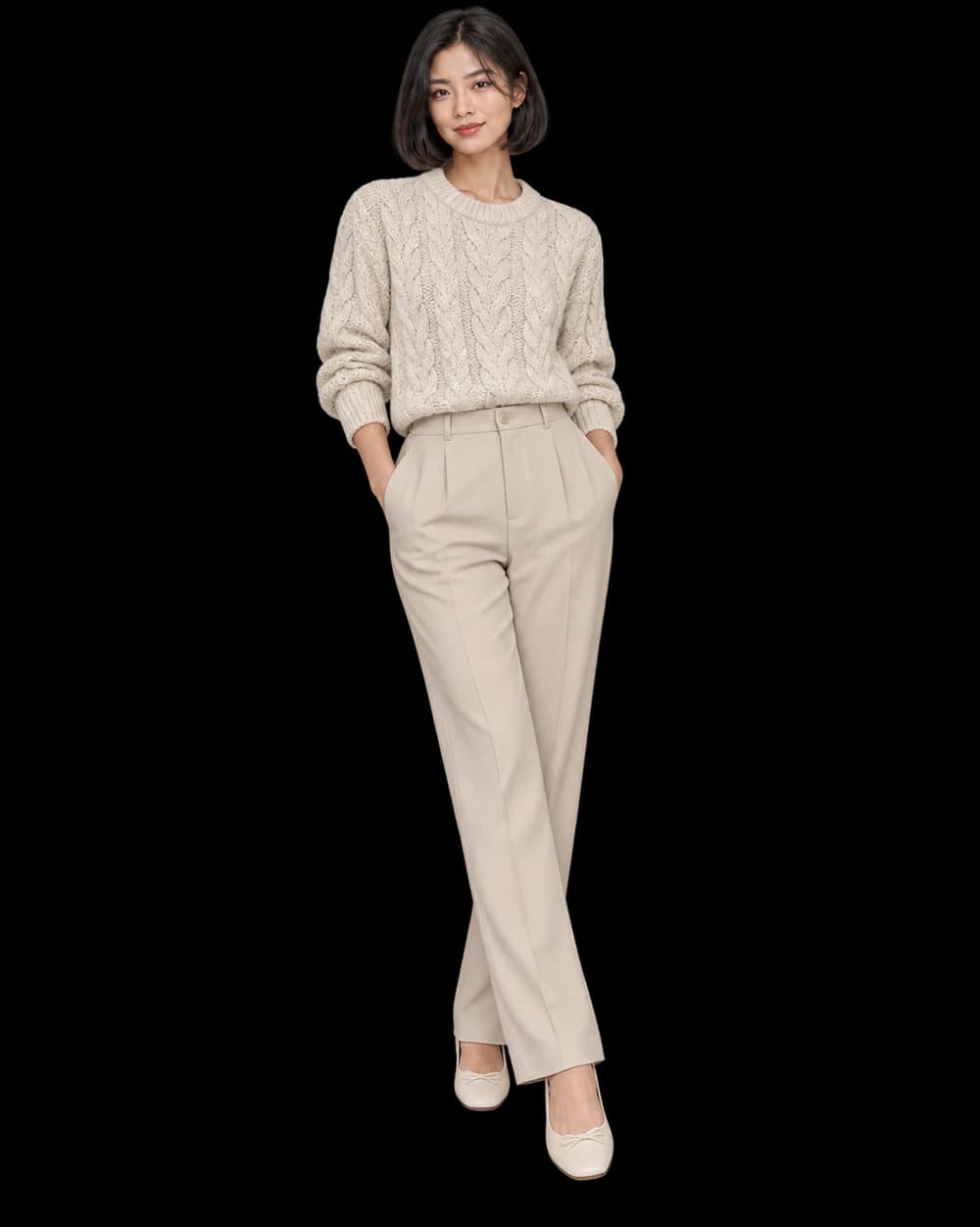
Knit structure and repeated motifs. Ribbed neck, cuffs and hem. Overall thickness and garment outline.
Treat the stitch as product information
Knitwear is more than a silhouette in a color. Stitch size, cable direction, ribbing and surface texture can define the item. Choose a source where those features are visible and make them explicit priorities in the brief. A soft-looking result is not automatically the same knit.
Inspect the original at the resolution you intend to use. If the pattern is already blurred or compressed, a new image cannot reliably establish its structure. Keep a sharp original detail photograph available for review and for any customer-facing material explanation.
Choose light that reveals the surface
Soft directional light can give the stitch depth without burying it in heavy shadow. Avoid asking for extreme glow, dense atmosphere and highly textured surroundings in the first sample. Each adds another surface that can compete with the garment. A pale, quiet backdrop is a useful starting point.
Follow cables and repeated motifs through the body and sleeves. Check that ribbing remains distinct at the neckline, cuffs and hem. Review the apparent thickness of the garment and look for texture that has become a printed pattern instead of a knitted structure.
Keep the outline in the same review
Texture can distract from a changed shoulder, sleeve or body length. Compare the complete garment before zooming into the surface. A fold should have a plausible relationship to the source material, but the image is not evidence of weight, warmth or softness. Keep those descriptions grounded in your actual product information.
For a knitwear collection, test a representative texture rather than choosing only the plainest item. Review each SKU separately after the shared direction runs. If a complicated stitch repeatedly changes, use original photography for that detail and keep the generated asset in a broader editorial role.