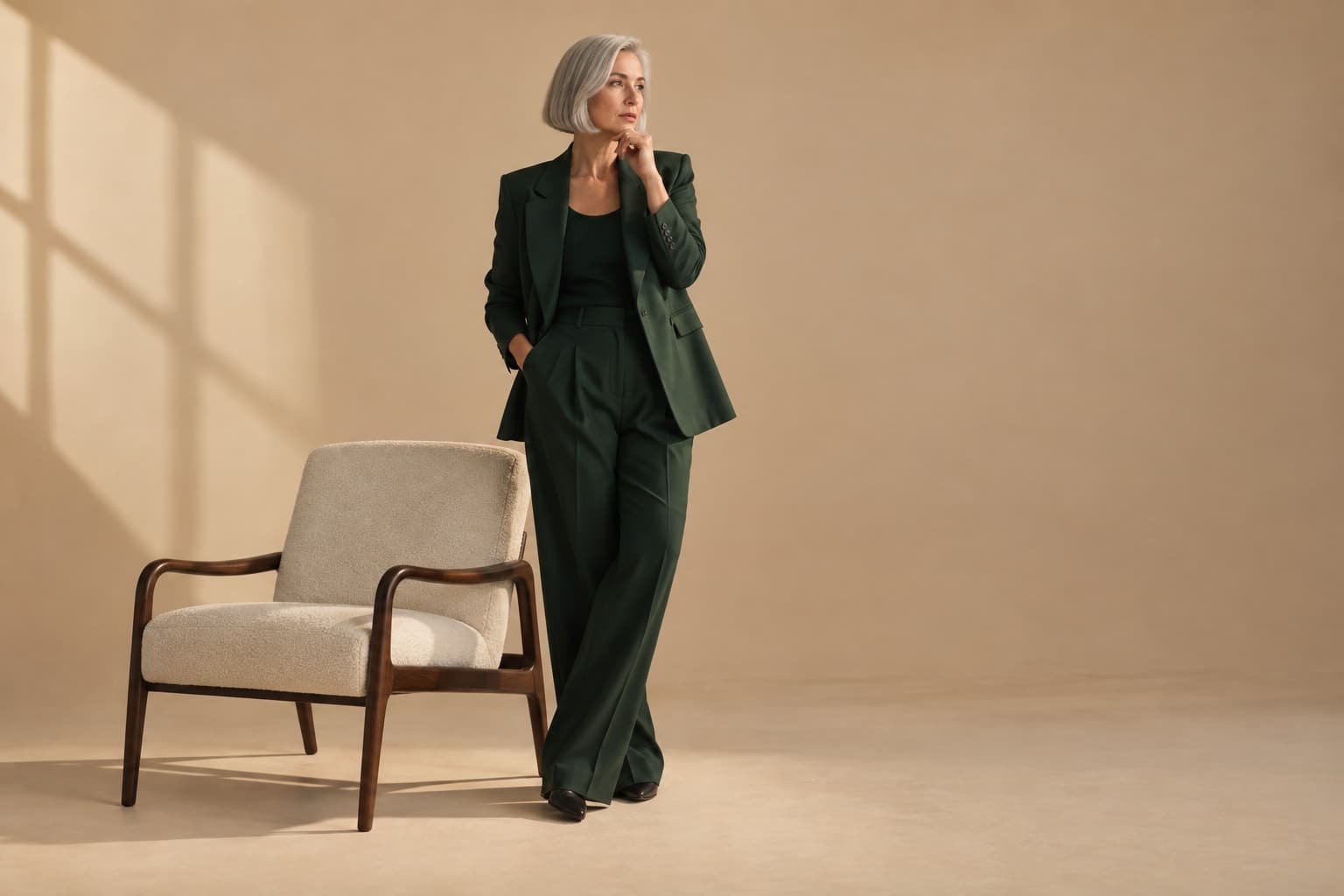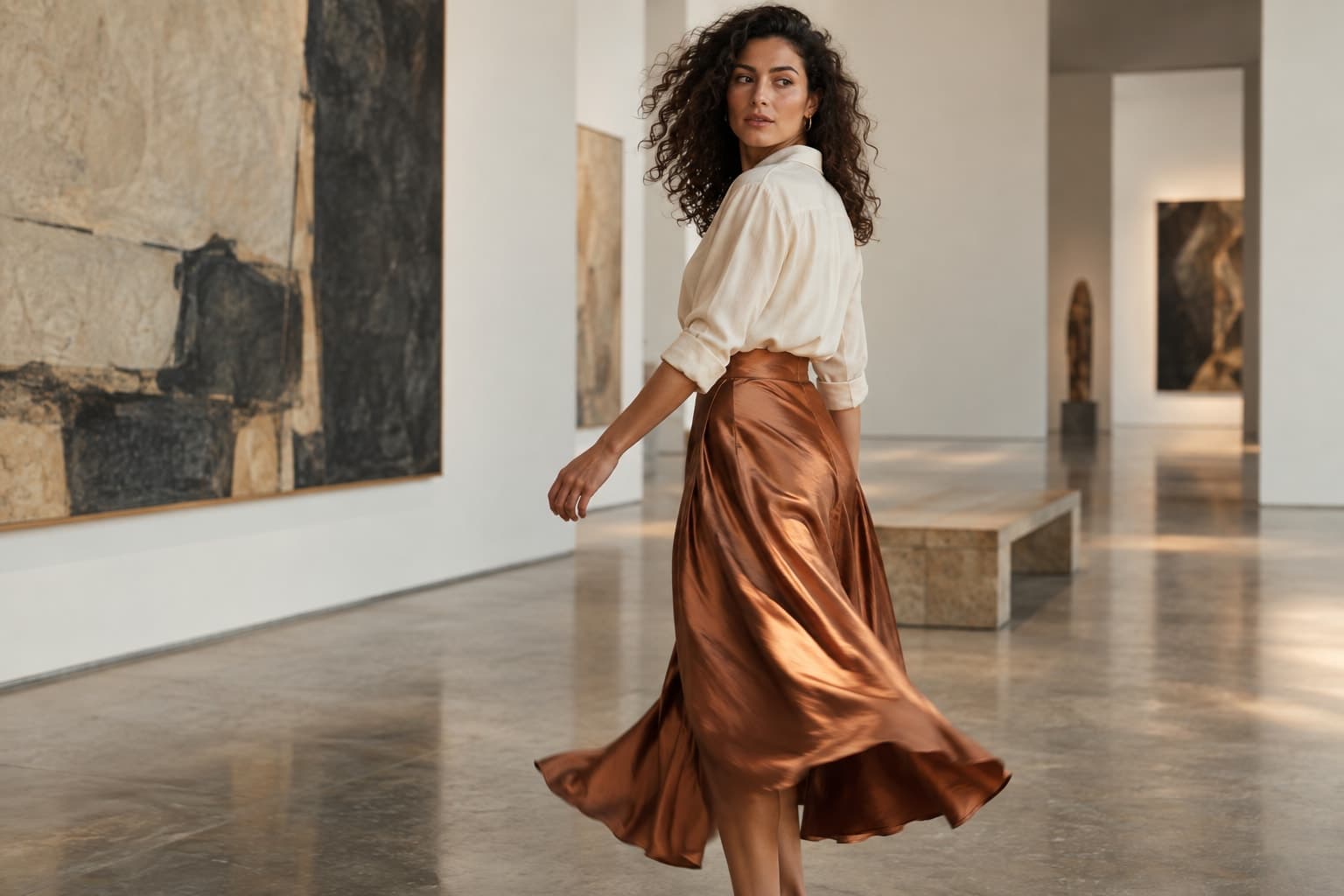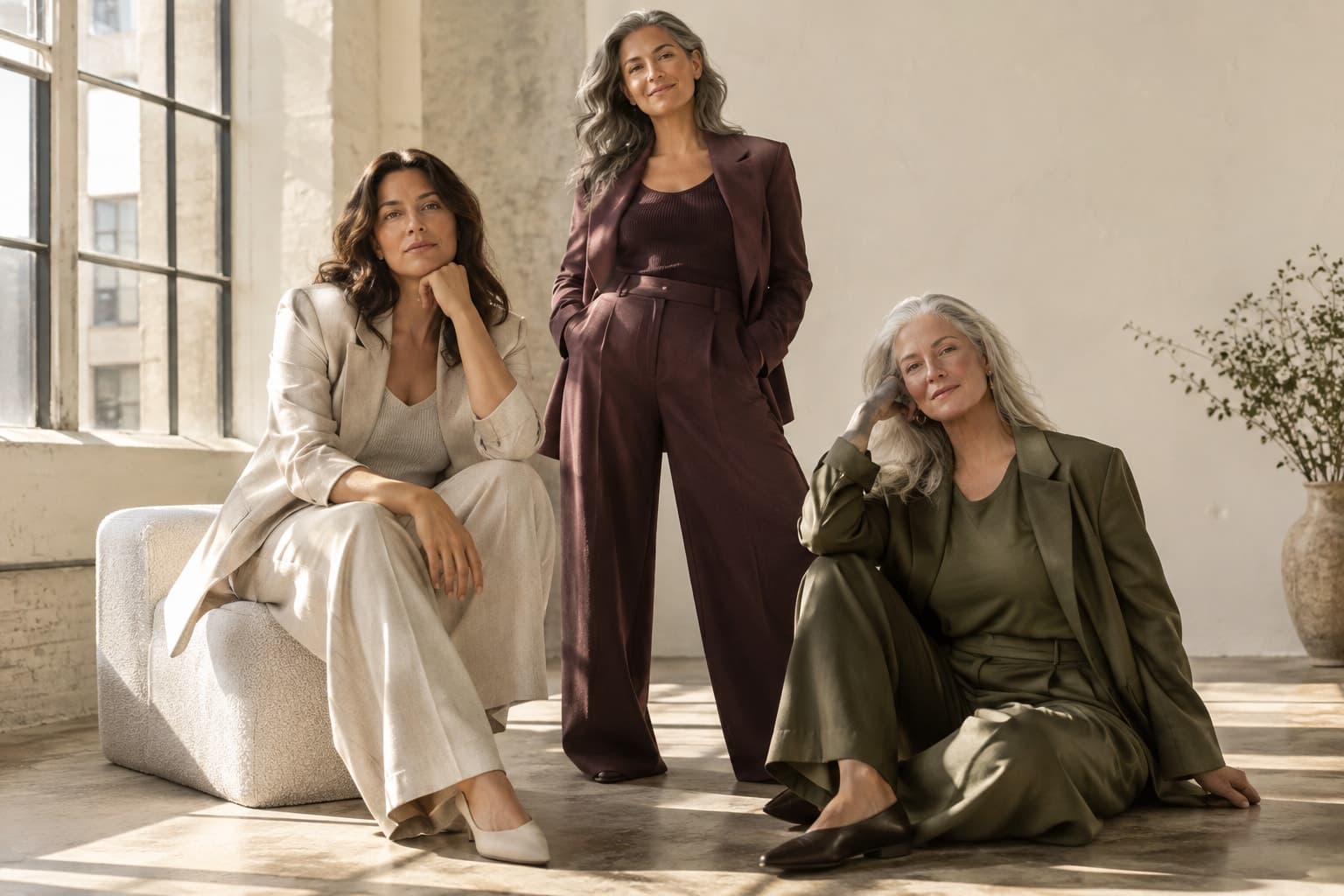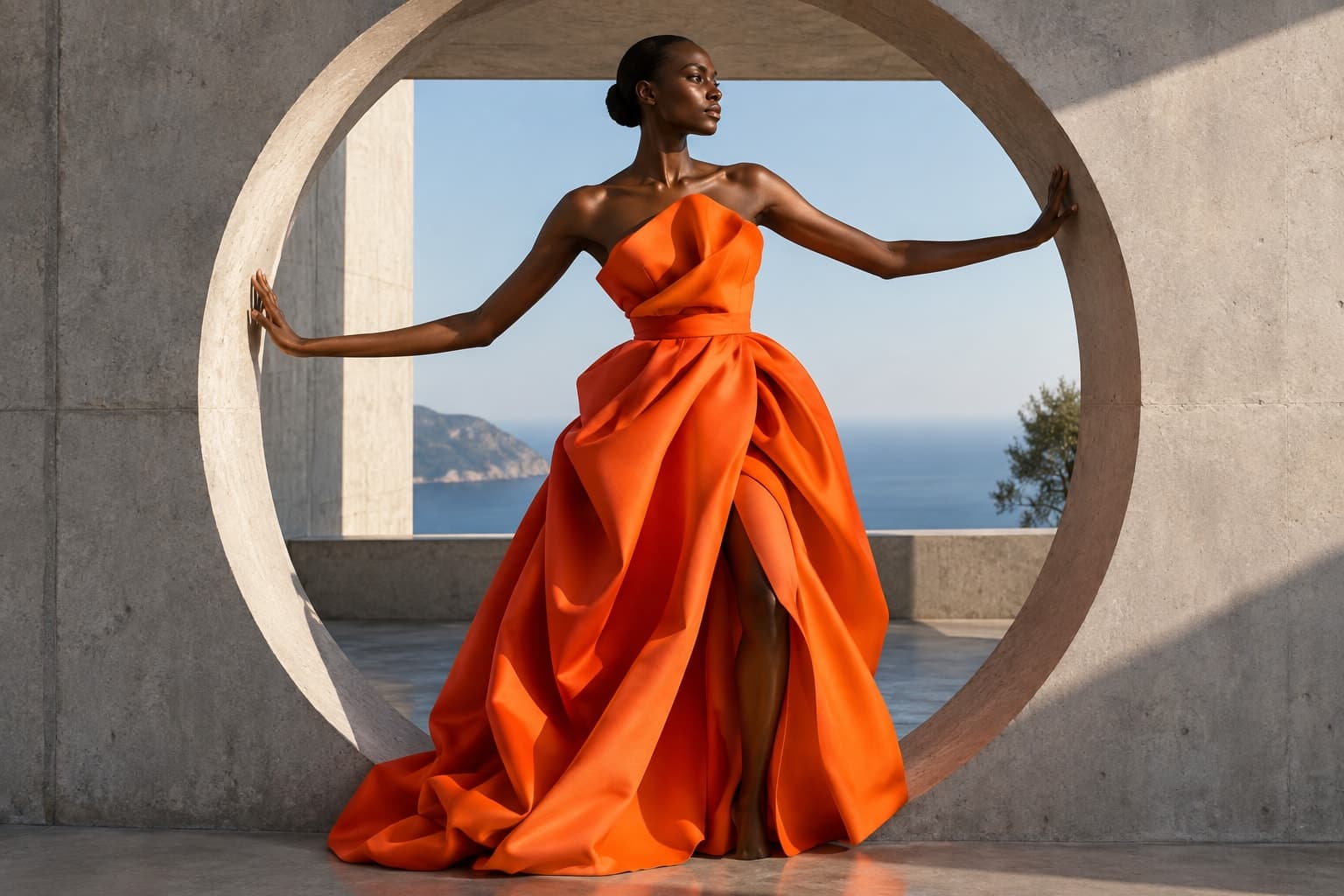
Give an unconventional fashion campaign a coherent visual system, from the first concept to the final product checks.
The starting point
An experimental fashion campaign needs a rule strong enough to survive experimentation. Without one, every frame can be surprising while the collection remains forgettable. Start with a visual decision that comes from the clothes: the tension of a fastening, a repeated curved seam, the contrast between a soft fabric and a rigid silhouette. Let that decision shape the world around the garment.
Choose a rule that can produce a series
A rule is more specific than a mood. 'Futuristic' can point toward almost anything. 'Every composition includes one curved architectural shadow that echoes the jacket's seam' gives the team something to make and review. The rule should accommodate several products without forcing them into identical pictures.
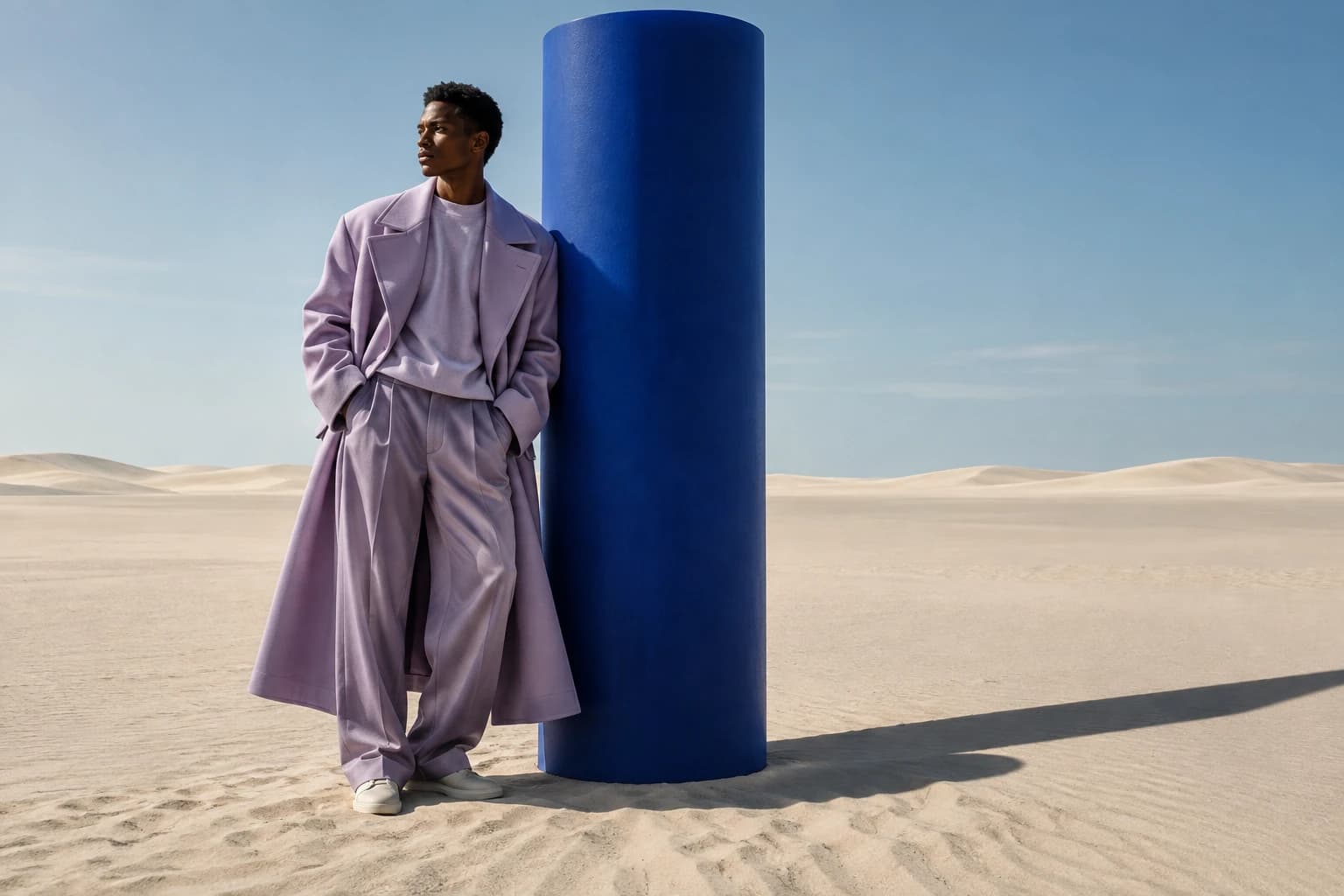
For a hypothetical sculptural outerwear collection, the team could use offset planes, a restrained mineral palette, and standing poses that preserve the garment outline. The concept would be judged by whether it clarifies those shapes, not by how many unusual props fit into a frame. Write the idea in one sentence before collecting more references.
Make a range of ambition
Develop three levels of execution. The simplest might be a photographed garment against a graphic set. The middle version might introduce more complex lighting or a constructed environment. The most speculative version might use generated scenes for concept exploration. This range helps the team understand which visual elements matter before committing to an elaborate production.
Keep the same garment and framing in the first comparison. Changing the clothing, subject, camera angle, and setting together makes it hard to identify what the concept contributes. A rough but controlled contact sheet can teach more than several highly finished images that cannot be compared.
Protect the collection from the concept
Create a list of features that must remain legible: lapel shape, hem, hardware, layering, or a specific construction detail. Review those features before discussing atmosphere. If the concept depends on hiding the very detail that makes the garment distinctive, revise the composition. Creative direction should give the product a stronger voice.
For any generated imagery, compare the result with approved garment references. Check invented seams, changed proportions, and plausible-looking materials that do not match the actual item. Keep speculative design experiments clearly separated from pictures intended to sell an existing product. Both can have a place in the project, but they communicate different things.
Plan the sequence, not just the hero
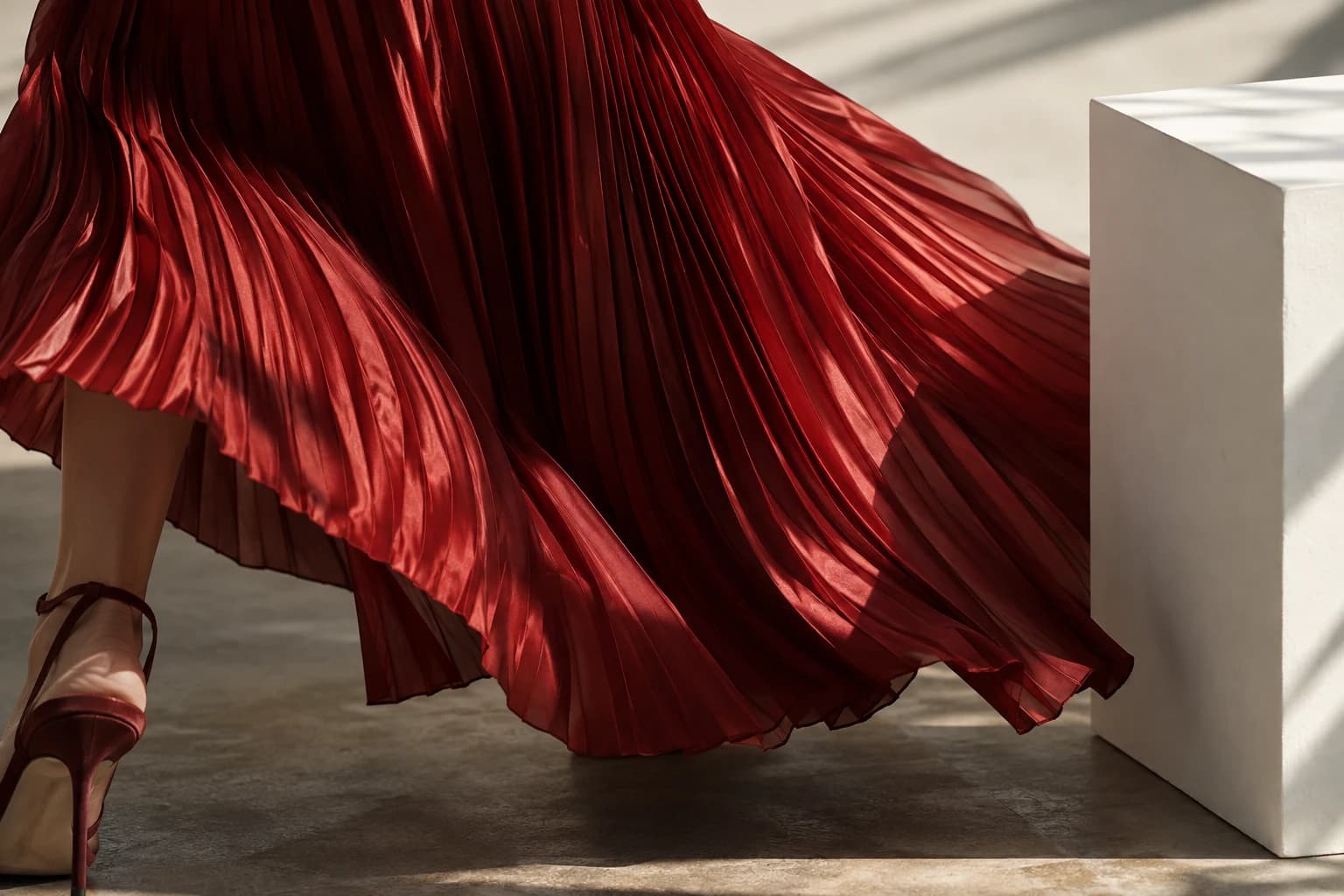
A campaign needs rhythm. Choose an opening frame that establishes the world, a wider image that shows the silhouette, a close detail that rewards attention, and a quieter ending. The pictures do not need to tell a literal story. They should give the viewer new information as the sequence progresses.
Test that sequence in the actual placements: a landing page, an email, a social carousel, and a narrow mobile screen. Some frames can be placement-specific. Do not force a carefully composed wide image into every format if the crop destroys its idea. Record which version belongs where so that later reuse does not undermine the campaign.
The final approval question is simple: can someone describe the collection after seeing the work? If they remember only the unusual setting, the art direction may need restraint. A successful experiment makes the clothes feel more particular while leaving enough room for surprise.