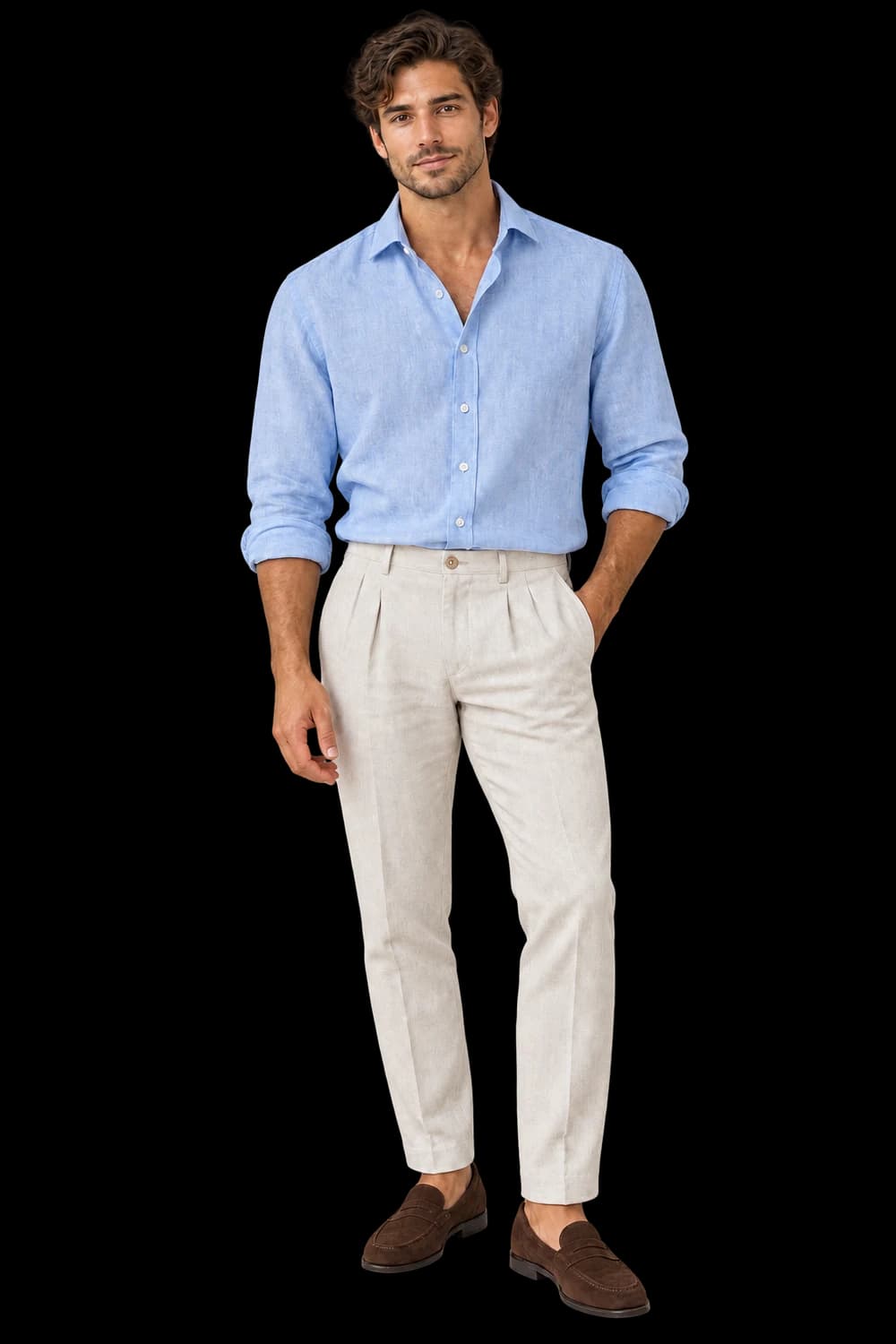
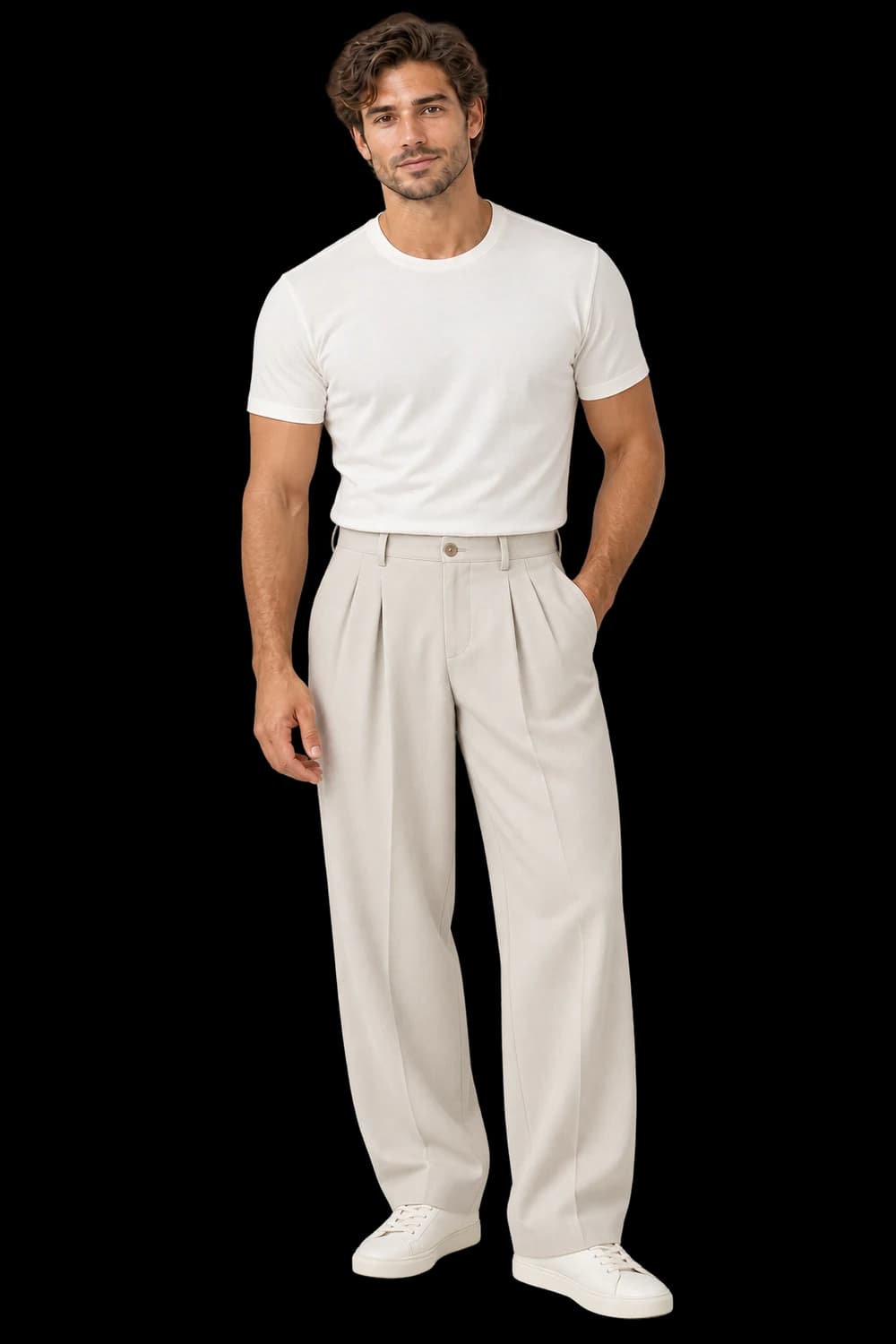
Tailoring deserves a considered frame.
Direct suit imagery with clear lapels, jacket length and trouser proportions, then inspect the complete ensemble.
Add your own product. Edit the starting direction. Review the quote before requesting one sample.
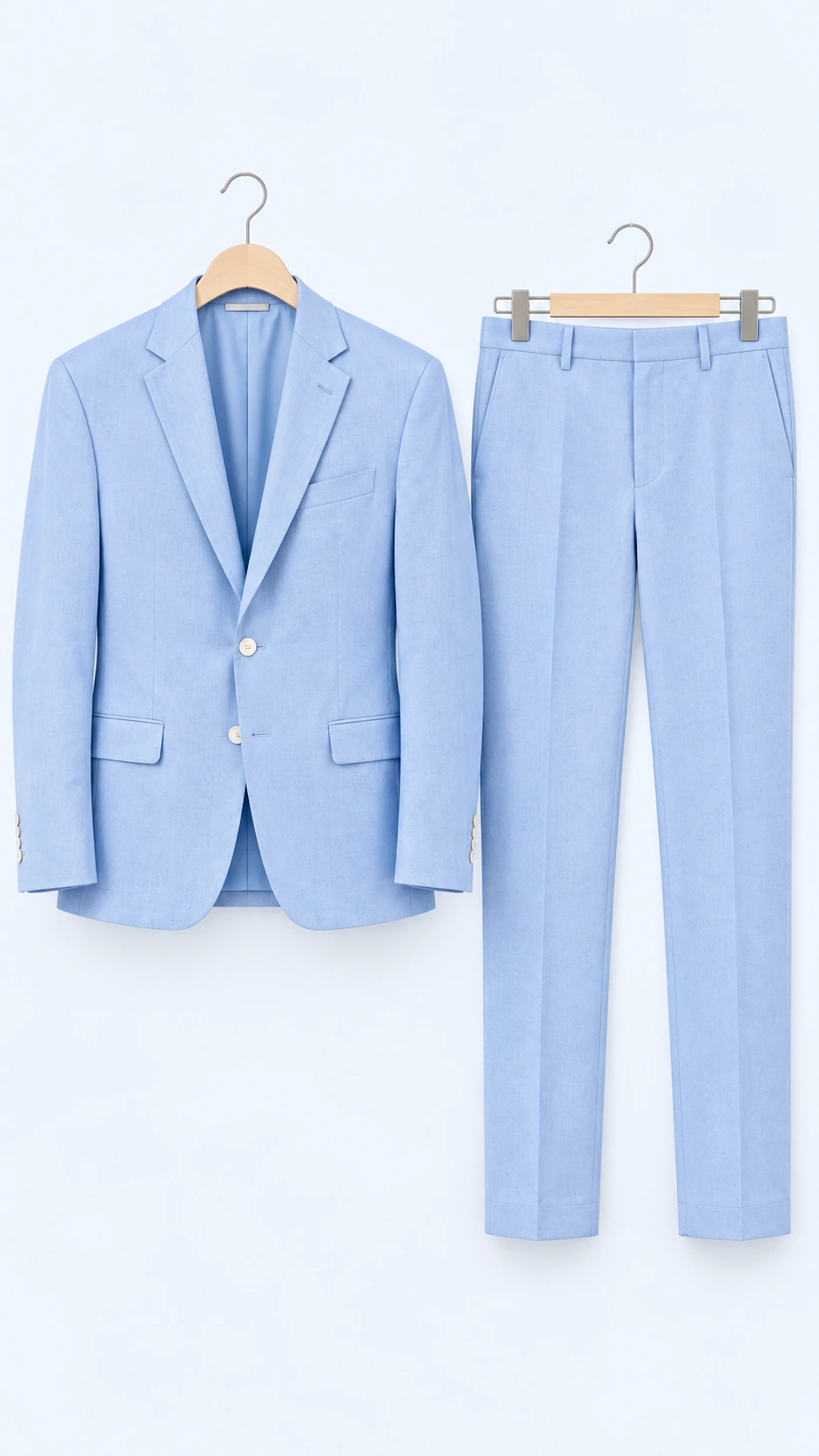
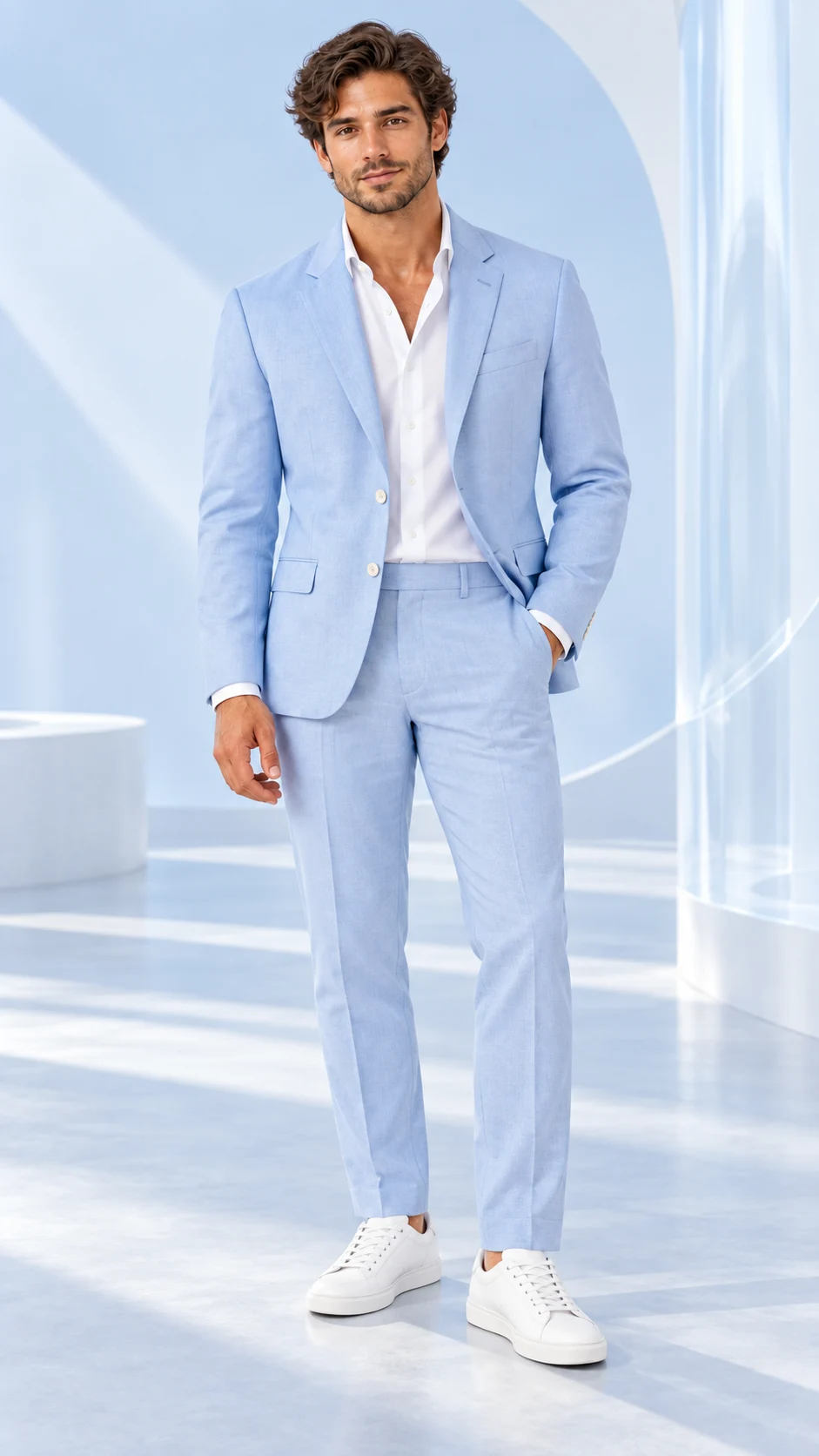
What to keep in the frame.
Use your original as the standard. These details deserve a separate pass before you approve the image.
- 01Lapel, button stance and pocket shape
- 02Jacket length relative to trousers
- 03Fabric consistency across both pieces
The better starting point.
Use a clear source for the suit pieces. When combining separate jacket and trouser references, use the outfit workspace and review each piece in the result.
Have a public shop? Import your product ↗Photograph the supplied suit on an adult model in a restrained limestone courtyard with soft side light. Frame the complete model head to shoes. Keep lapels, button stance, pockets, jacket length and both trouser legs visible. Preserve the original tailoring and fabric consistency. Relaxed neutral pose without crossed arms.Open this direction ↗
A suit photograph can feel polished while changing the jacket you sell. Start by identifying lapel width and shape, button stance, pocket style, shoulder line and jacket length. These details should remain recognizable when the setting changes. A dark suit against a dark wall may be atmospheric, but it is a poor first test if the lapels disappear.
Review the complete image from head to footwear, with room around the subject. Do not infer tailoring measurements, comfort or fit from the result. Keep original product evidence alongside the campaign assets and approve the visual only for the story it can tell accurately.