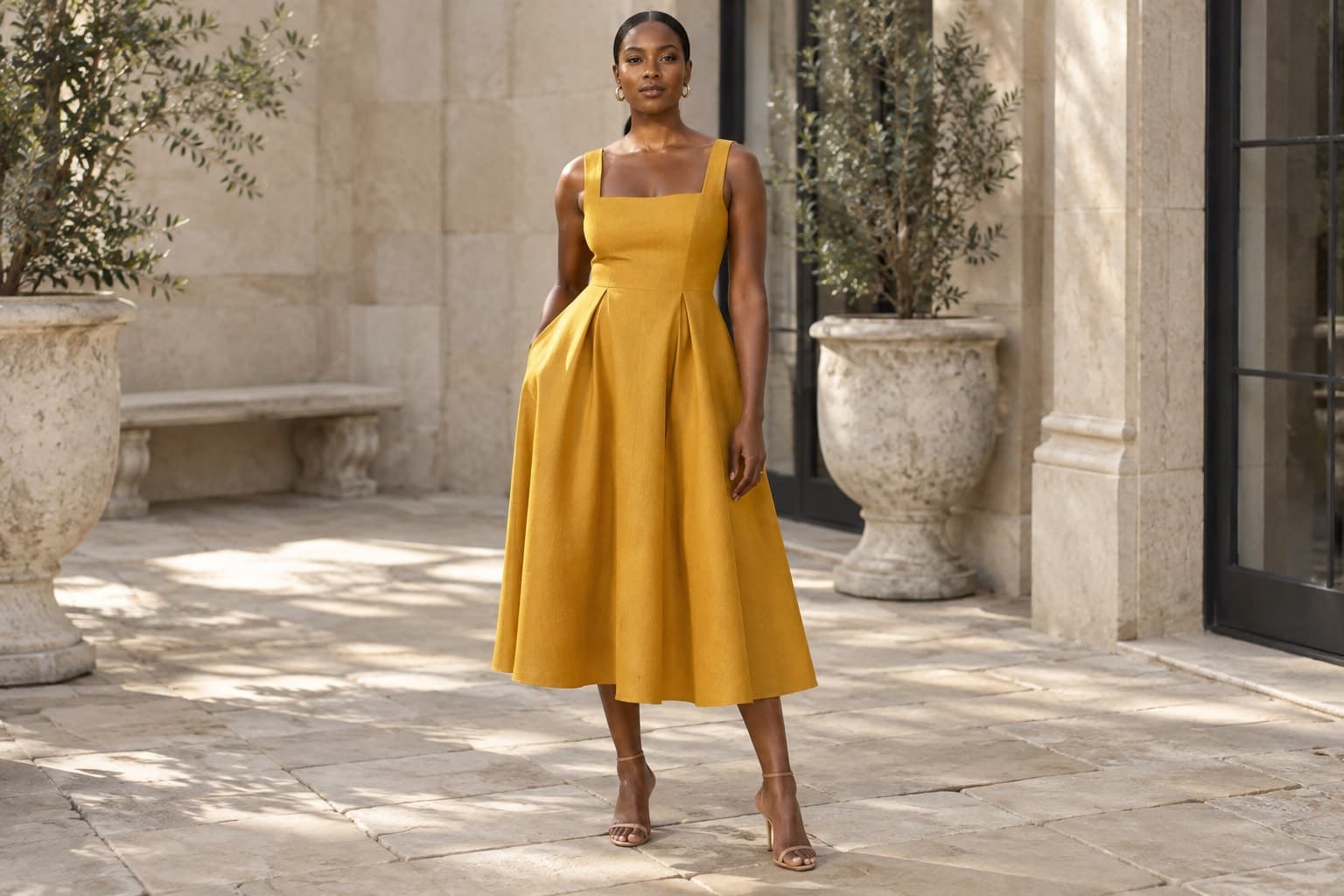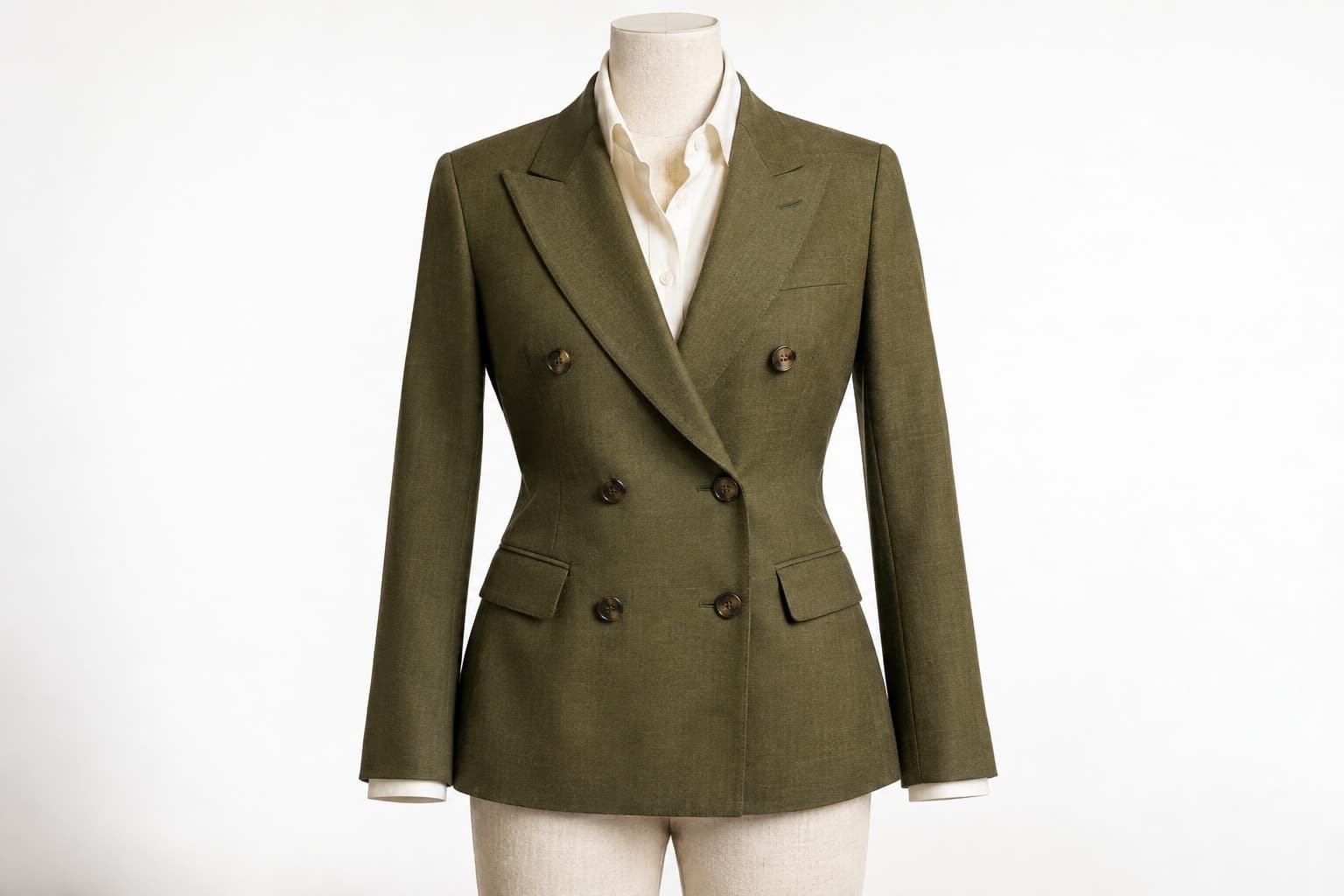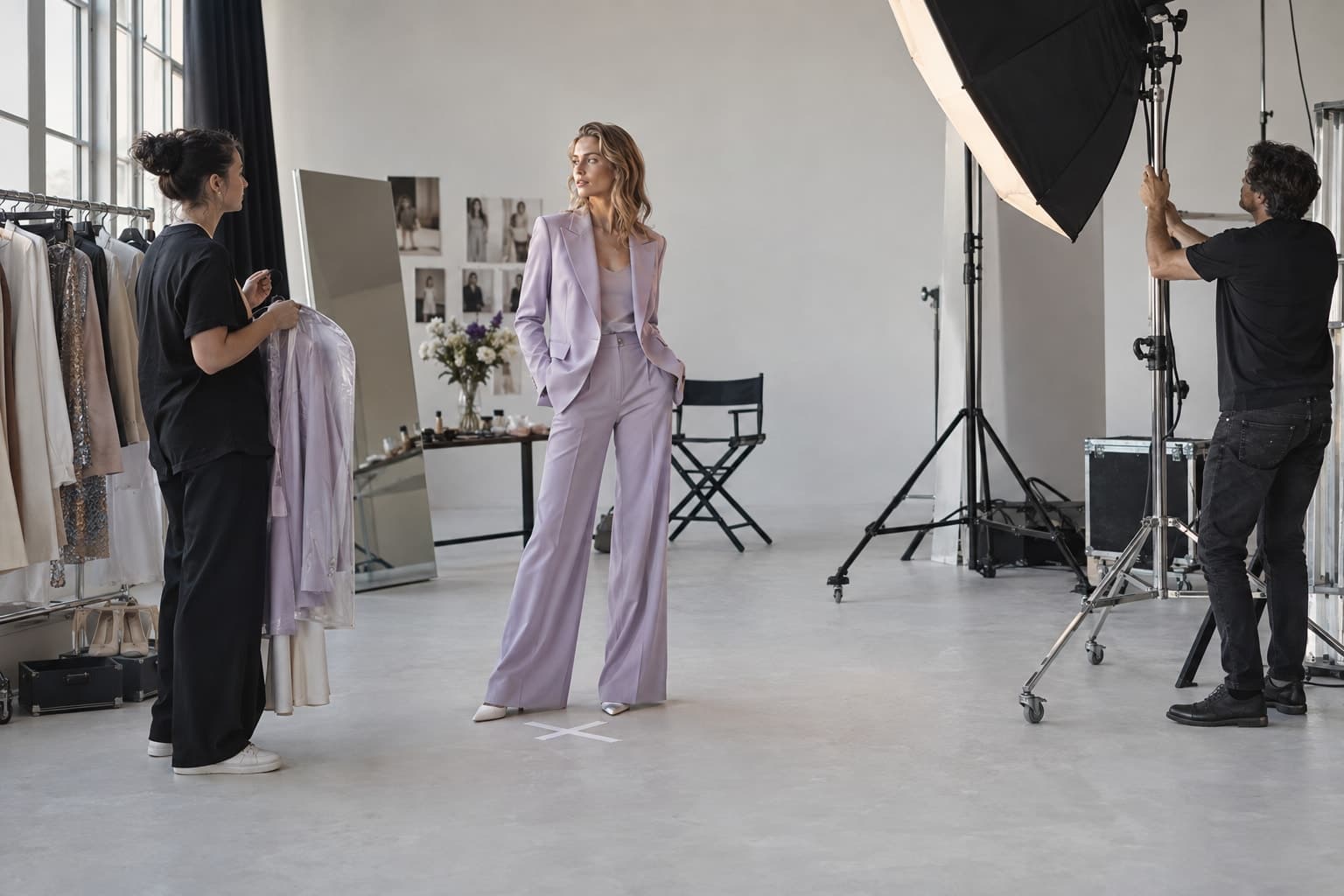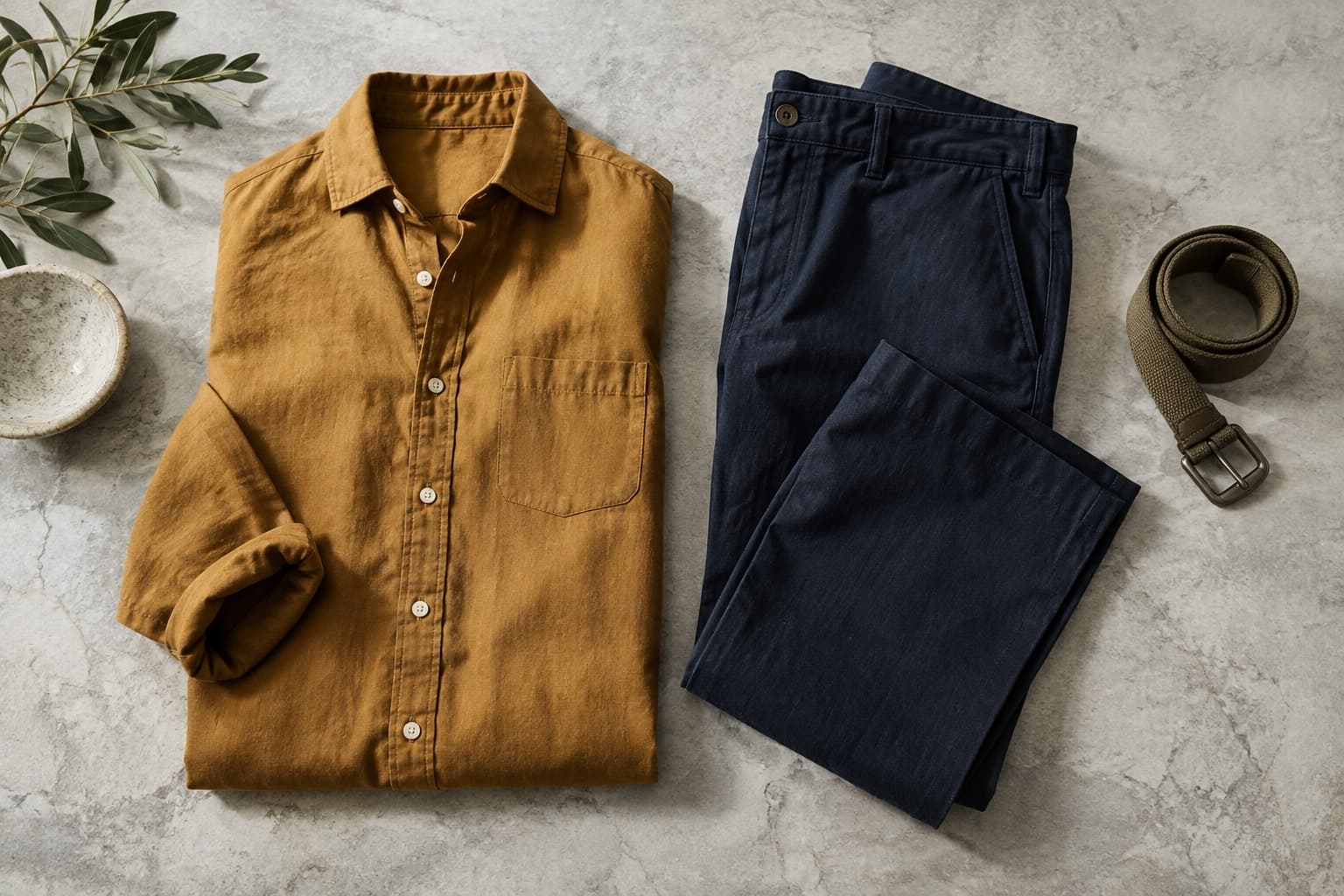
Match flat lay, mannequin, on-model, and detail photography to the information each garment needs to communicate.
The starting point
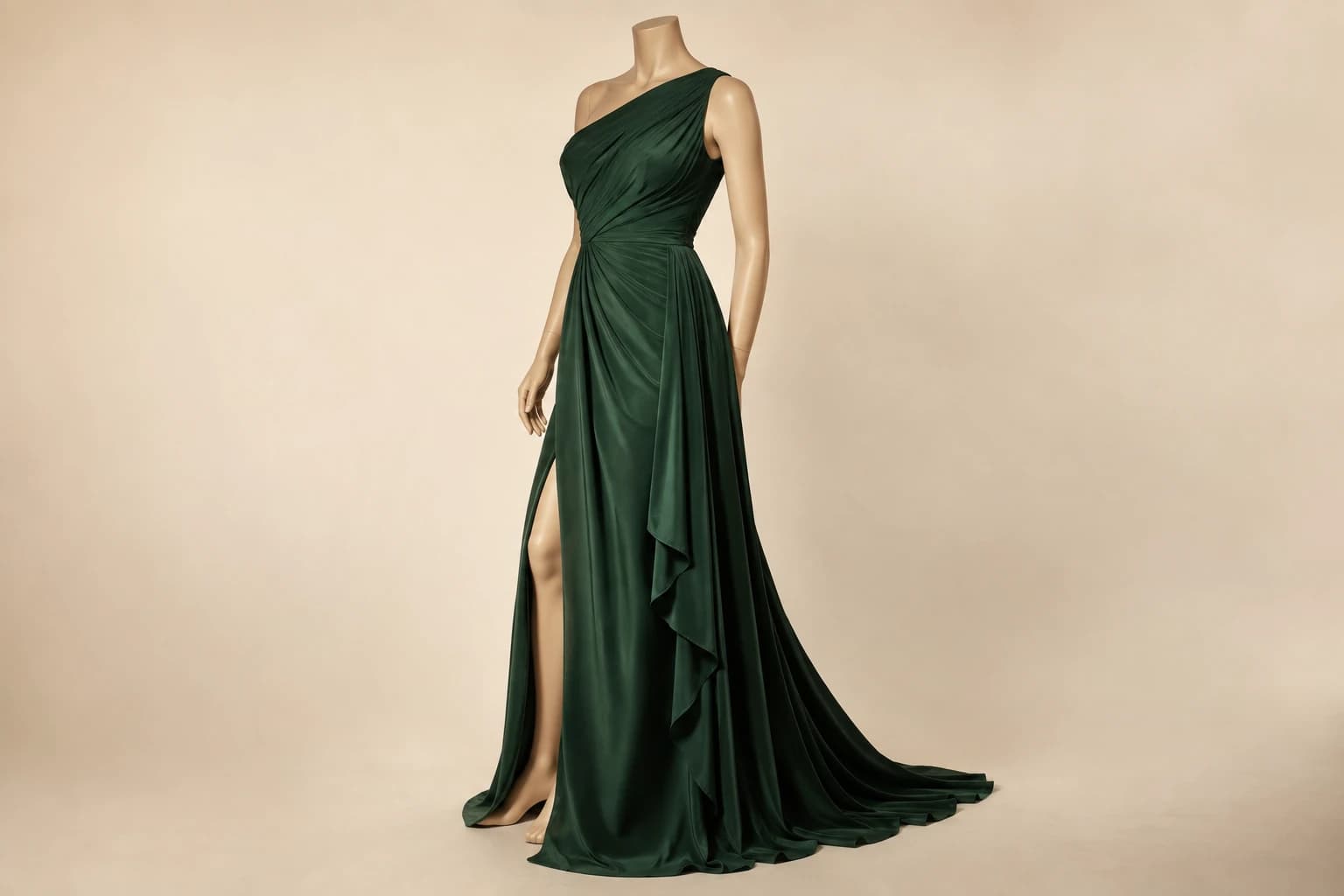
There is no single clothing photograph that answers every product question. A flat lay can make construction easy to inspect. A mannequin can organise a garment into a three-dimensional shape. An on-model view can show styling and proportion. A detail photograph can reveal something the wider frame cannot.
Choose the method by the information you need, then build a small set of complementary views. This approach is more useful than deciding that every product must receive the same number of images in the same poses. Consistency should help the shopper compare items, while leaving room for the garment's particular needs.
Start with a clear inventory view
Prepare the garment carefully and show its full outline. Remove temporary distractions, arrange sleeves and hems, and make sure the front opening is understandable. Use a background that separates from the product without overwhelming it. This first view should be straightforward enough to become a reference for later work.
For a hypothetical overshirt, the inventory view might show the collar, front pockets, buttons, and hem together. A flat lay could work if it preserves the shape clearly. A mannequin might be useful when the garment's structure is difficult to arrange flat. Judge the result by clarity rather than allegiance to a method.
Add the view the first photograph cannot provide
Turn the garment around if the back contains relevant construction. Capture a side view when it helps explain volume or length. Use an on-model image when styling or overall proportion deserves attention, while keeping exact sizing information in the product data.
Do not assume that a more expressive pose supplies more information. A crossed arm can hide a pocket; a tucked hem can disguise length. Use those choices intentionally for editorial work and provide a simpler companion view when the product gallery needs it.
Give details their own frame
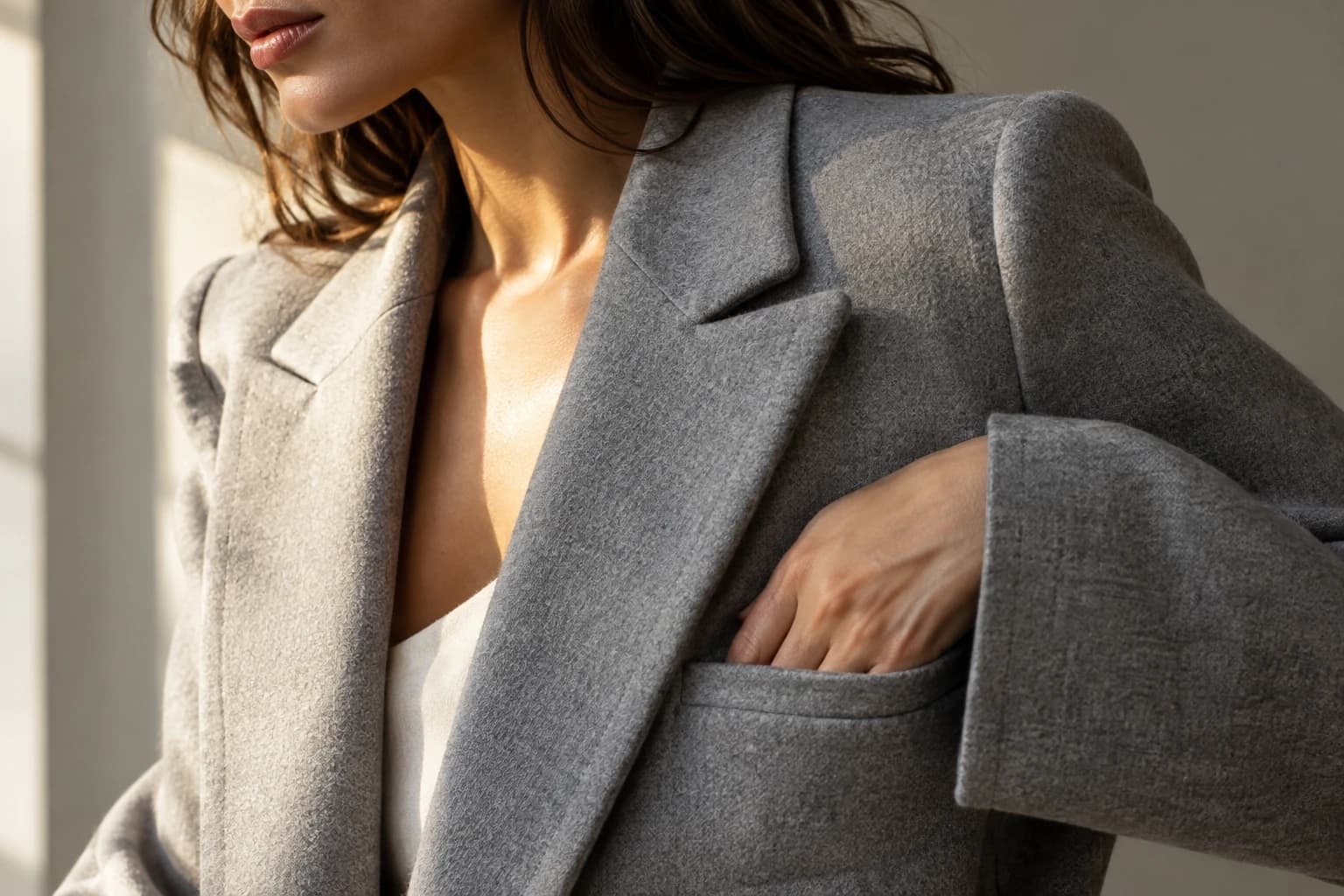
Choose details that matter to the item: a closure, a fabric texture, a lining, an adjustable element, or a particular seam. Focus and lighting should reveal that feature clearly. An extreme close-up of an unimportant area adds a file without necessarily adding understanding.
Keep colour treatment consistent across the set and compare images against the physical garment under appropriate viewing conditions. Different screens and lighting environments can affect appearance, so avoid treating a single edited image as perfect colour proof. The aim is a careful, internally consistent representation with useful written colour information.
Prepare once for several destinations
Capture enough room around the garment to support the crops you actually need. Record the approved master image and create destination-specific versions from it. Check every crop rather than assuming an automatic square or vertical export will preserve the important details.
If generated transformations are part of the workflow, start from these approved references and apply the same product checks to the results. Keep direct photographs available for features the transformed image cannot represent reliably. The methods can complement one another within one well-organised gallery.
Before publishing, ask someone unfamiliar with the product to describe it from the image set. Notice what they cannot determine or what they misunderstand. Add a view only when it answers a useful question. The best clothing photography is the set that helps a shopper understand the item with the least unnecessary effort.
Research & sources
These findings describe the named studies and companies. They provide context, rather than measuring Atellia or establishing the effect of the advice above. Source dates are separate from retrospective theme years.
Study scope and numerical references
- Estimated online sales returned: 19.3 %. US retail 2025 projection, not apparel-specific. NRF and Happy Returns, 2025
- Projected retail returns: 849.9 USD billion. US retail 2025 projection. NRF and Happy Returns, 2025