
Create a coherent journey between fashion advertising and the shop, then test the change without overclaiming what caused the result.
The starting point
An advertisement creates an expectation. The product page needs to help the shopper recognize the item and understand the offer that attracted them. If the color, styling, model, or crop changes dramatically, the visitor may need to work harder to connect the two. Treat visual continuity as a testable design decision, then evaluate it in the context of the whole journey.
Name the promise in the advertisement
Write down what the ad communicates before reviewing its performance. It might emphasize a silhouette, a fabric detail, a styling idea, or an occasion. Identify the actual product and any accessories shown with it. The landing page should make those relationships clear rather than leaving someone to search the catalog for the item they remember.
For a hypothetical linen shirt campaign, an image may draw attention to an open collar and relaxed styling. The product page can repeat that approved frame while adding direct views, measurements, and material details. Reusing the image helps recognition, but the gallery still needs to explain the product beyond the original mood.

Check continuity without making every image identical
Use a consistent product representation and a coherent visual language. The landing image does not need to duplicate the ad in every case; it needs to preserve the useful expectation. A wider view may add information, while a close detail may answer the next question. Review the sequence as a customer would encounter it.
Inspect generated variants carefully. A changed sleeve, neckline, or print can make two apparently related pictures describe different garments. Keep accurate references and reject versions that alter a buying decision. Visual consistency begins with the product itself, not only with a repeated background or subject.
Use research as context rather than a promise
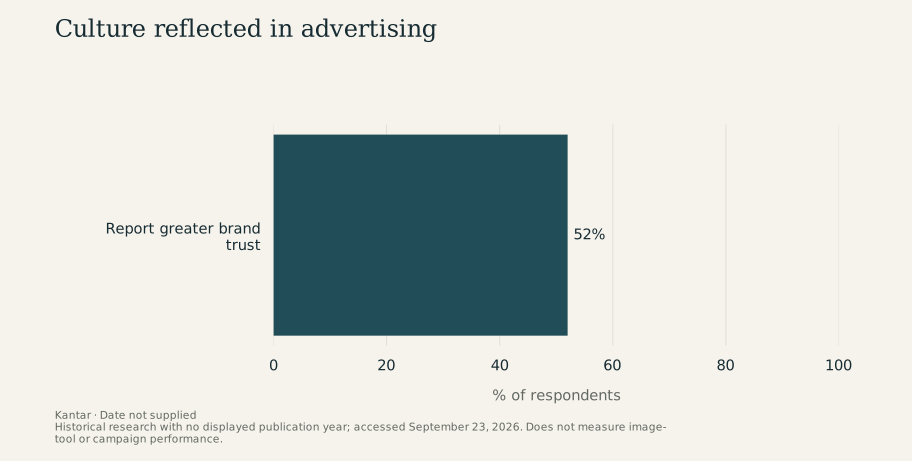
Kantar reports that 52% of consumers in its cited research expressed more trust when advertising reflected their culture. That is a stated-attitude finding, not an expected return on ad spend from selecting a particular model. Representation deserves thoughtful creative work, while the commercial effect of your campaign needs its own measurement. Source: Kantar's diversity-in-advertising research.
Avoid converting a broad branding statistic into a predicted revenue increase for a single image change. Research can suggest hypotheses and useful questions. Its population, method, and scope should remain attached to any number you present, especially when the result is used to justify a marketing budget.

Test the journey with a clear hypothesis
A useful hypothesis might be that repeating the approved campaign frame on the landing page helps visitors recognize the advertised item. Keep other material elements stable where practical, including price, availability, and the offer. Decide the comparison and evaluation period before reacting to early results.
Review the whole path: the advertisement, visit quality, product engagement, and purchase behavior. A high click rate can coexist with weak downstream performance if the image attracts people who misunderstand the product. Equally, low traffic or inventory changes can make a small test inconclusive. Record uncertainty rather than forcing a winner.
Save the result with the creative brief and the exact assets tested. The next campaign can reuse what was learned about continuity while still developing a fresh concept. The aim is a recognizable, informative journey that earns attention and then makes the product easier to evaluate.
Research & sources
These findings describe the named studies and companies. They provide context, rather than measuring Atellia or establishing the effect of the advice above. Source dates are separate from retrospective theme years.
Culture reflected in advertising
Source date not supplied · % of respondents
View chart data
| Measure | % of respondents |
|---|---|
| Report greater brand trust | 52 |
Study scope and numerical references
- Consumers reporting greater trust when ads reflect their culture: 52 percent. Stated attitude finding; source publication year not displayed. Not an expected ROAS lift Kantar