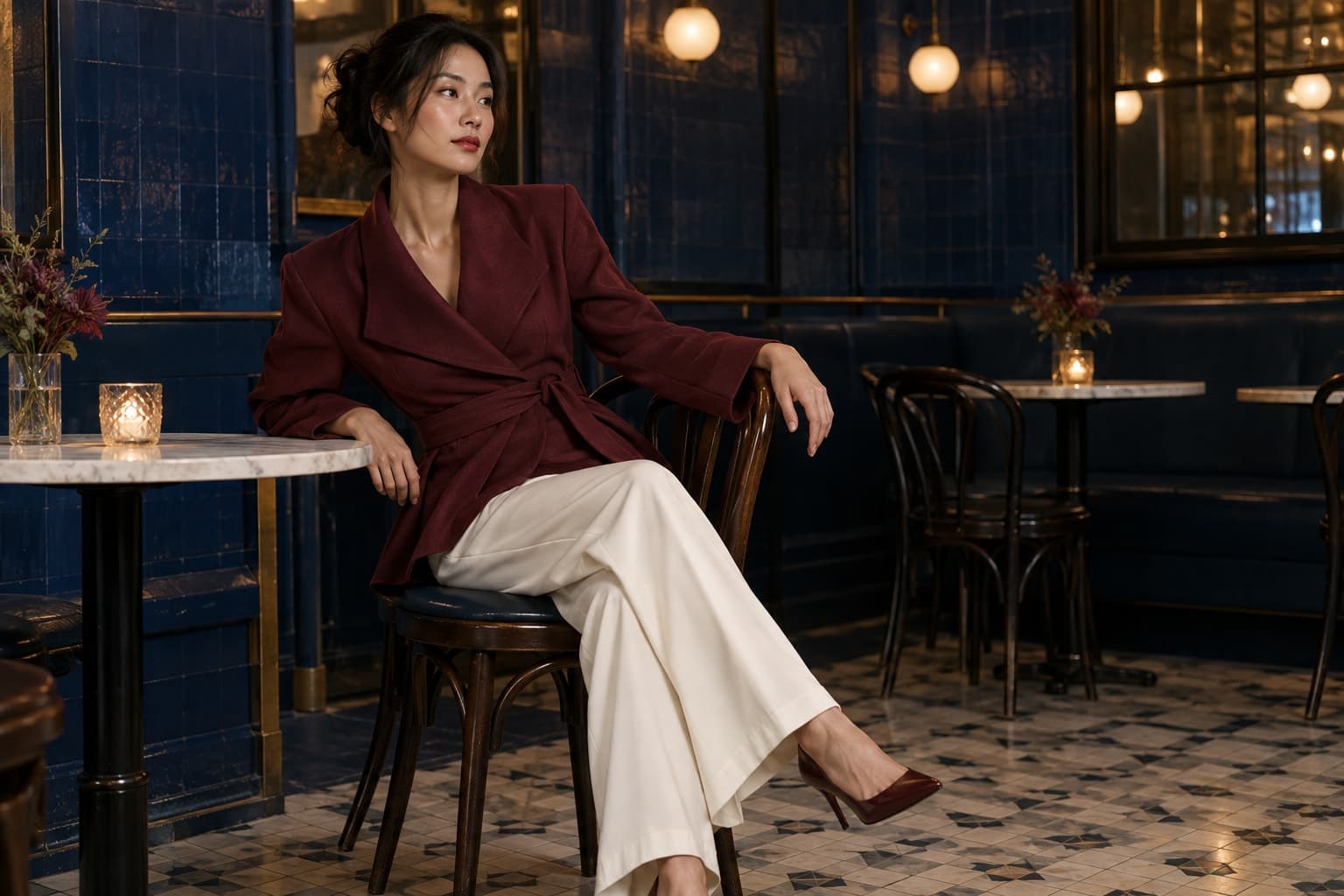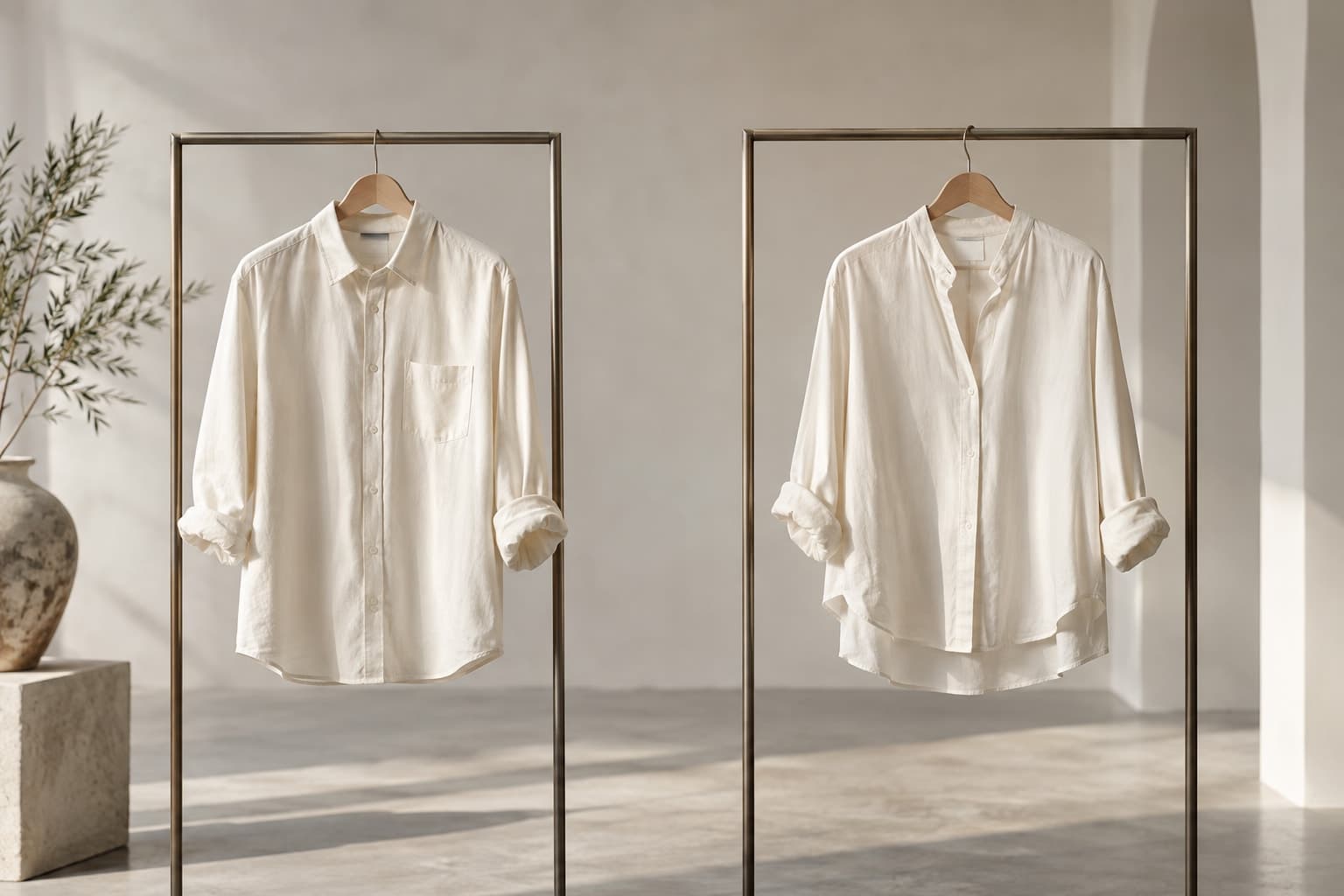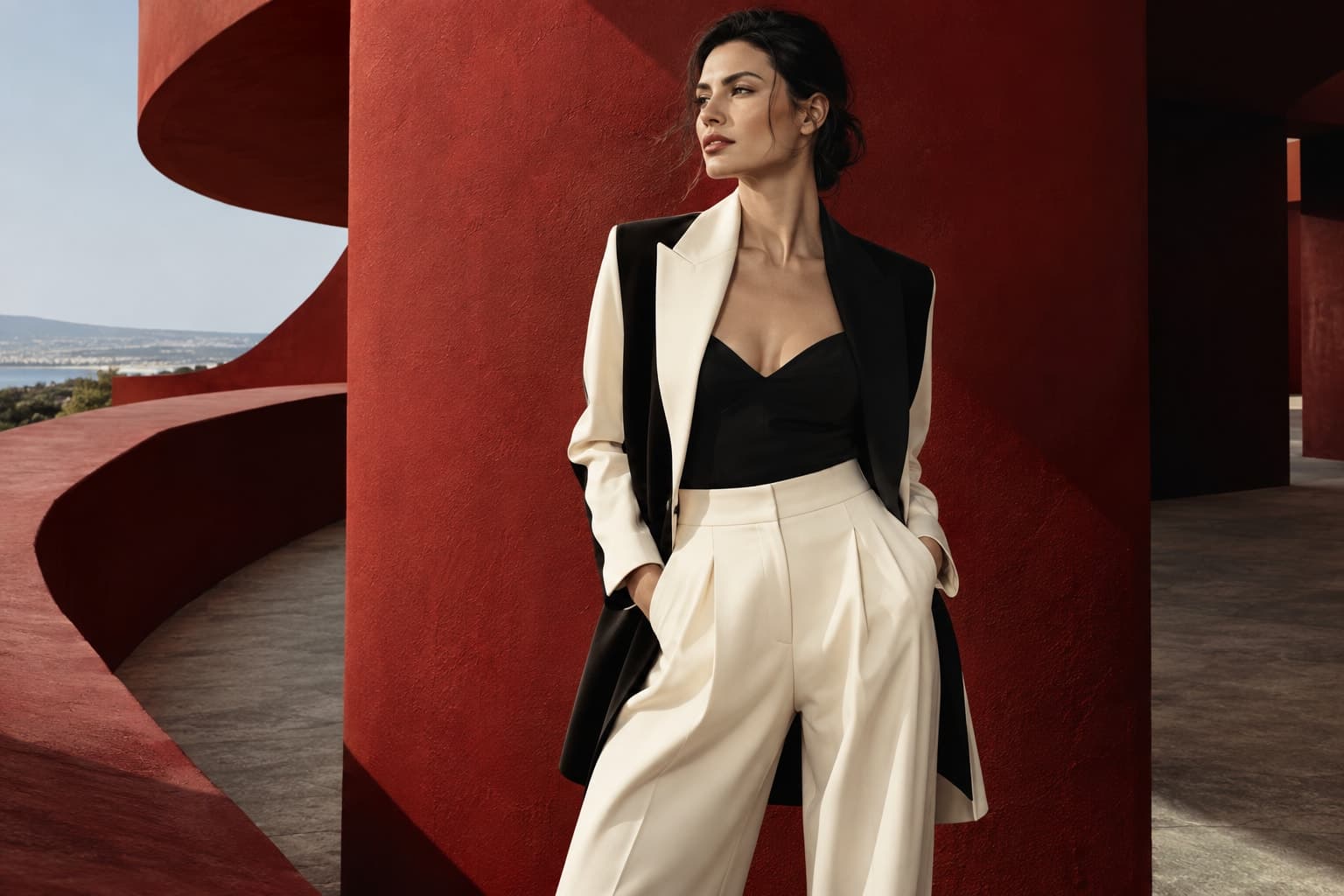
Turn a brand point of view into repeatable choices about images, styling, language, and the customer experience.
The starting point
A recognisable fashion brand makes a series of choices that belong together. The clothes, the photography, the words, and the service all create expectations. A logo can identify the source, but it cannot do all of that work alone.
Start by describing the reason your collection deserves attention. Keep the statement grounded in the actual product and customer. “Versatile clothes for people moving between work and the rest of their day” gives a creative team something to interpret. “Premium, timeless, elevated” leaves most decisions unresolved.
Translate the point of view into visible choices
Pick a small set of image rules that express the brand's idea. These might concern the distance from the subject, the kinds of settings used, the amount of styling, and the relationship between garment and background. Explain why each rule exists. A rule with a purpose is easier to apply when a new situation appears.
For a hypothetical practical tailoring label, the image world could favour complete outfits in ordinary architectural settings, with enough space to see movement and proportion. A more playful collection might use unexpected colour pairings or expressive poses. Neither direction is inherently better; each should support a specific product point of view.
Build consistency around decisions, not repetition
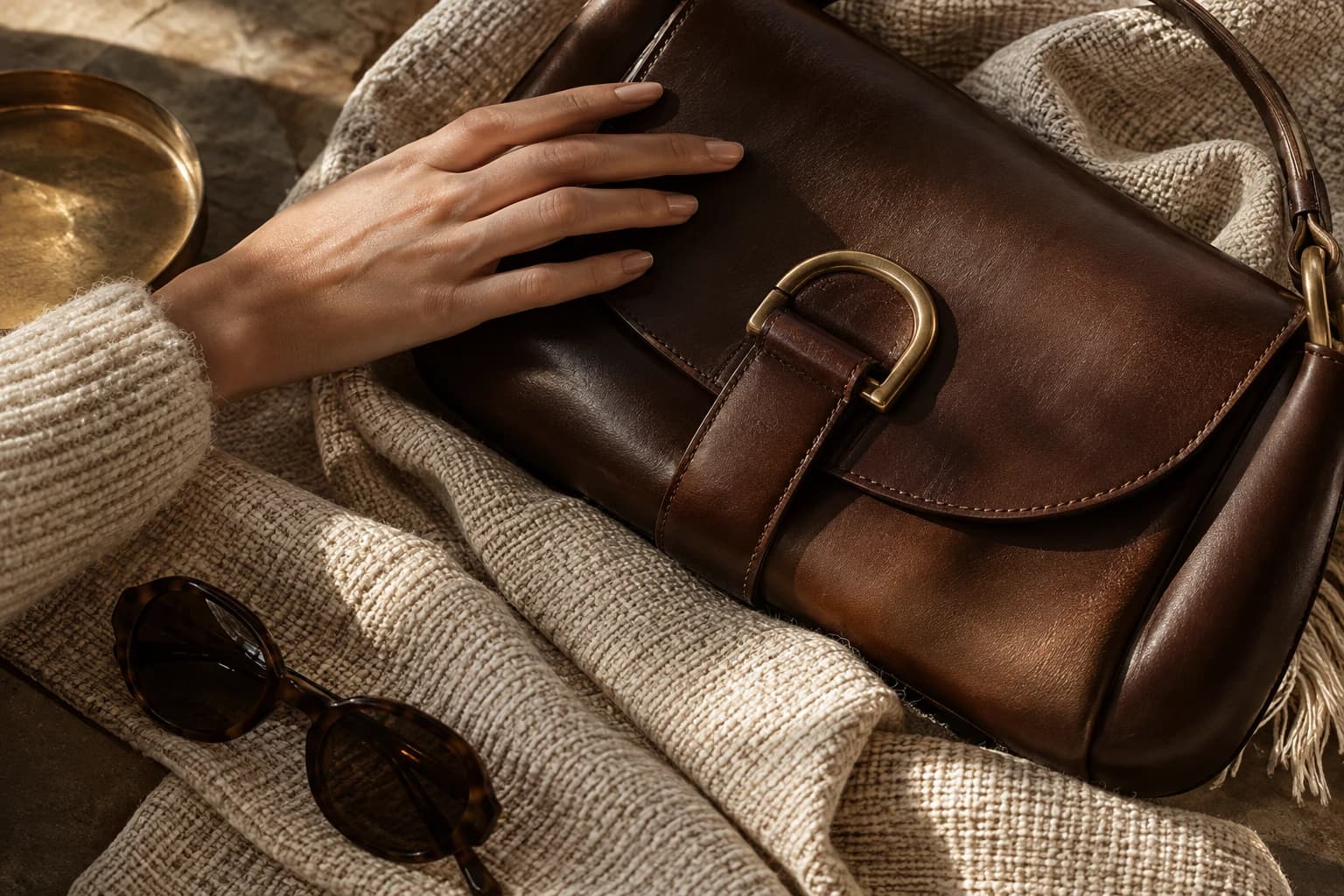
A brand can remain recognisable while changing locations, subjects, and formats. The underlying treatment of colour, composition, or styling can create continuity. If every image repeats the same pose against the same wall, the result may become monotonous rather than coherent.
Create a small reference board with approved examples and short annotations. Include one example that does not fit and explain why. This is often more useful than a long list of abstract adjectives. A freelancer or new teammate should be able to make a reasonable decision without asking the founder to judge every crop.
Connect the language to the product
Write descriptions that sound like the same company customers encounter in campaigns and support messages. The tone can change with the situation. A launch announcement may be enthusiastic; a reply about a delayed order should be direct and considerate. The underlying clarity and respect should remain consistent.

Avoid claims the product cannot support. If the collection's strength is a useful pocket arrangement or an appealing fabric texture, say that precisely. Borrowed luxury language can make an ordinary feature sound vague. A concrete description gives the shopper something they can recognise when the item arrives.
Audit the full customer journey
Look at an advertisement, a product page, a confirmation email, and a support reply together. Do they create compatible expectations? A quiet, considered campaign can feel disconnected from a confusing page full of exaggerated urgency. Branding continues wherever the customer experiences the business.
Choose one inconsistency to fix before redesigning everything. Perhaps product crops vary so much that the category page feels disjointed, or the descriptions use several different names for the same fit. Small operational corrections can make the brand feel more deliberate without requiring a new visual identity.
Keep the rules open to revision when the collection or audience changes. Record the reason for a change so future work evolves coherently. A strong brand identity is a useful set of decisions that helps people recognise what you make and what they can expect from you.