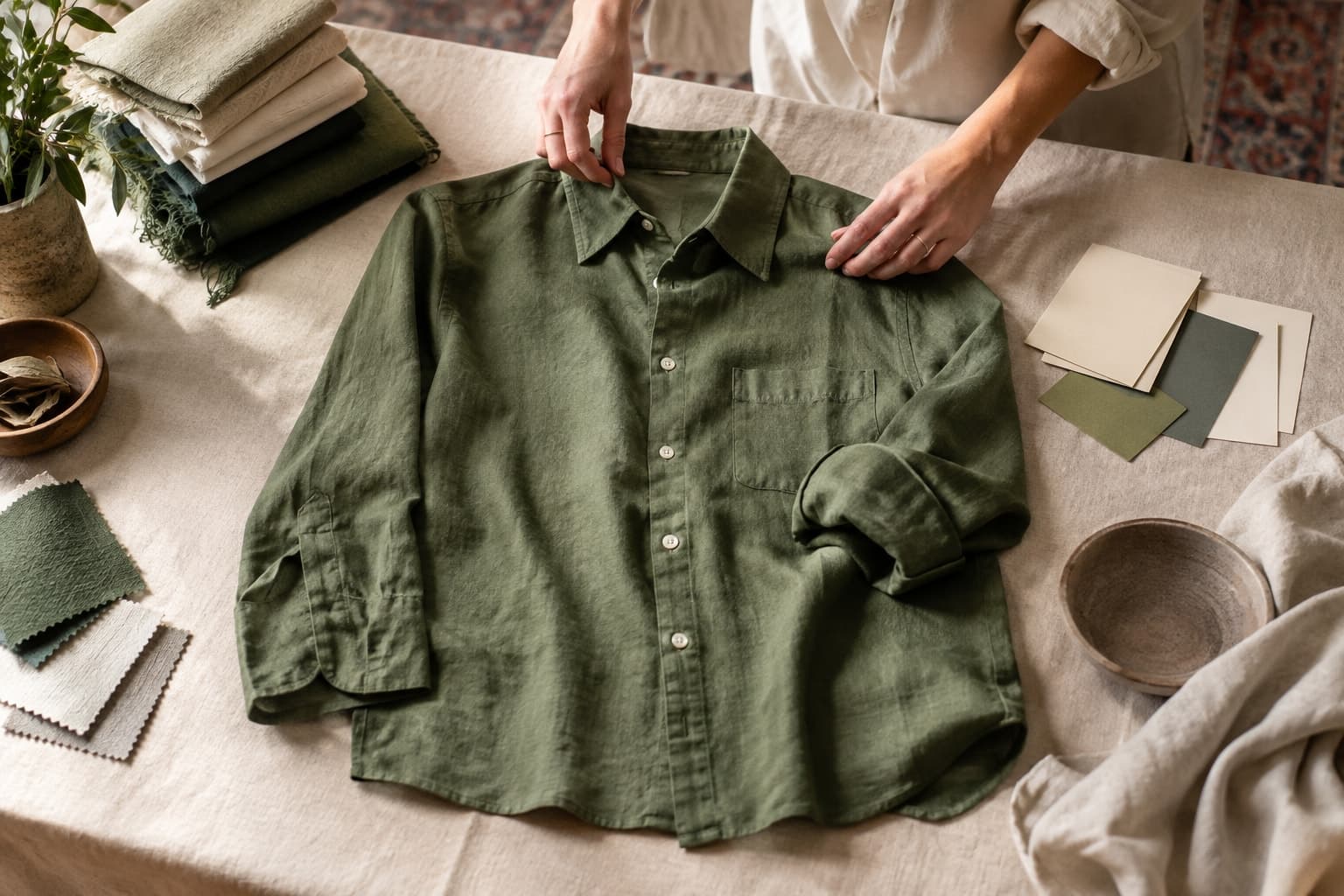
Compare managed production and self-service tools by ownership, review capacity, corrections, and the cost of approved assets.
The starting point
The practical difference between hiring an image production service and adopting software is who owns the work between brief and approval. Software gives your team controls. A service may take on some production, review, or coordination. Neither arrangement automatically produces better images; the right choice depends on the work your team can perform reliably.
Begin with a recent collection rather than a vendor's package names. Trace every step from sample arrival to published image. Include preparation, generation or photography, selection, garment checks, retouching, export, upload, and replacement when something is wrong. Then mark the steps that currently have no clear owner.
Price the responsibility you are transferring
A service proposal should explain what is delivered, what is reviewed, and what happens when an image fails the brief. Ask whether garment accuracy checks are included, whether corrections have limits, and which file formats arrive at handover. A low headline price means little if your team still spends hours correcting files.
With software, estimate the staff time required to operate and review it. A merchandiser who understands the product can make excellent decisions, but those decisions consume part of their working week. Include that time in your comparison. The relevant cost is the cost of an approved, usable asset delivered when it is needed.
Write a small paid trial that resembles real work
Choose a representative set from your own catalogue. Include an easy item, a patterned item, and a garment with a distinctive construction detail. Give each candidate supplier or workflow the same references and destination requirements. Avoid testing only on unusually clean samples that do not resemble the rest of your assortment.
For a hypothetical knitwear label, the trial could require a consistent front view, a close detail, and one editorial frame per style. State what must remain unchanged and who will make the final decision. Track elapsed time separately from hands-on time, because waiting for revisions affects launch planning even when nobody is actively working.
Inspect how corrections happen
The first output is only part of the experience. Deliberately request one precise correction during the trial. Does the workflow preserve the approved parts of the image? Does the request reach the right person? Can you identify the final version without searching through several conversations?

Ask how a missed deadline, unavailable input, or failed output is handled. A dependable process makes exceptions visible early. It should be possible to move a difficult garment to a different production method without losing the rest of the batch. Flexibility matters more than a promise that every product will work identically.
Consider a split arrangement
Many teams can handle straightforward catalogue work internally while commissioning specialist help for campaigns, complex garments, or peak seasons. A split arrangement needs common standards: file names, backgrounds, crop rules, and approval criteria. Without those, the collection may look as if several unrelated brands produced it.
Choose the arrangement that reduces your actual bottleneck. If the constraint is review capacity, more generation controls may not help. If the constraint is waiting for small revisions, direct access to a tool may be valuable. Match the purchase to the problem you observed rather than the feature list that sounds most impressive.
Revisit the decision after a complete drop. Compare accepted assets, correction effort, missed deadlines, and team workload. You are choosing an operating relationship as much as a visual capability, and that relationship should remain useful when the catalogue gets busy.